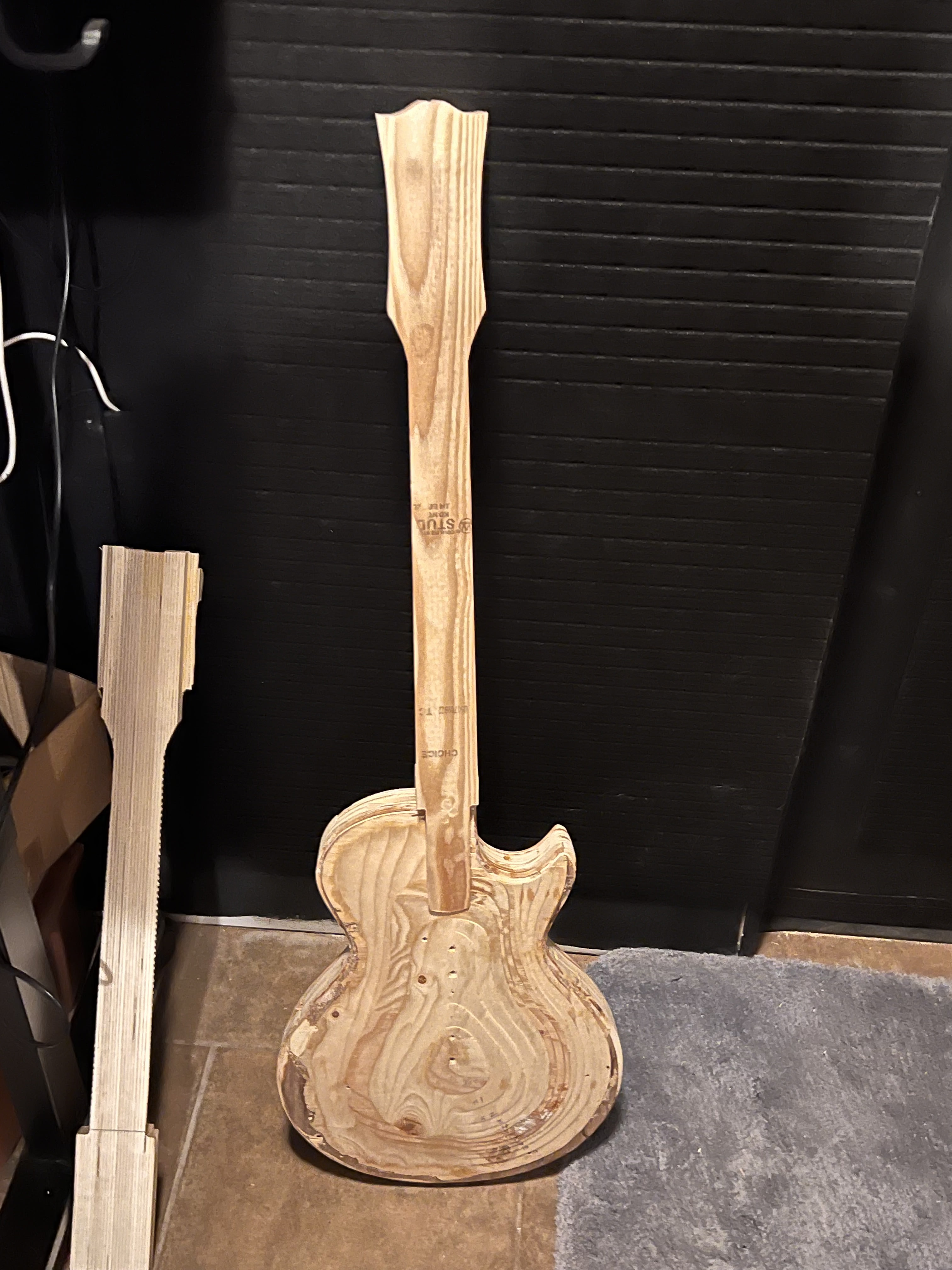
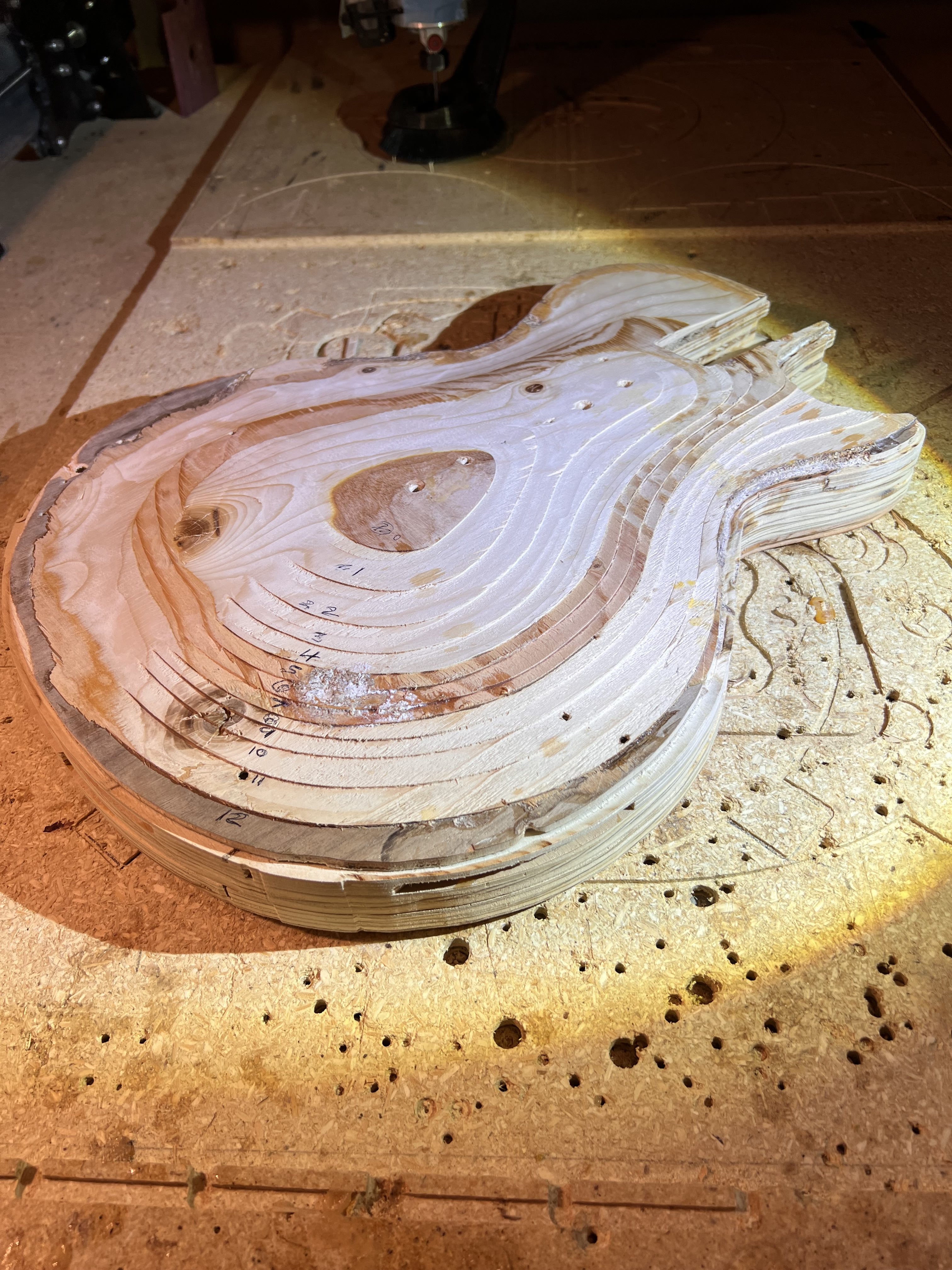
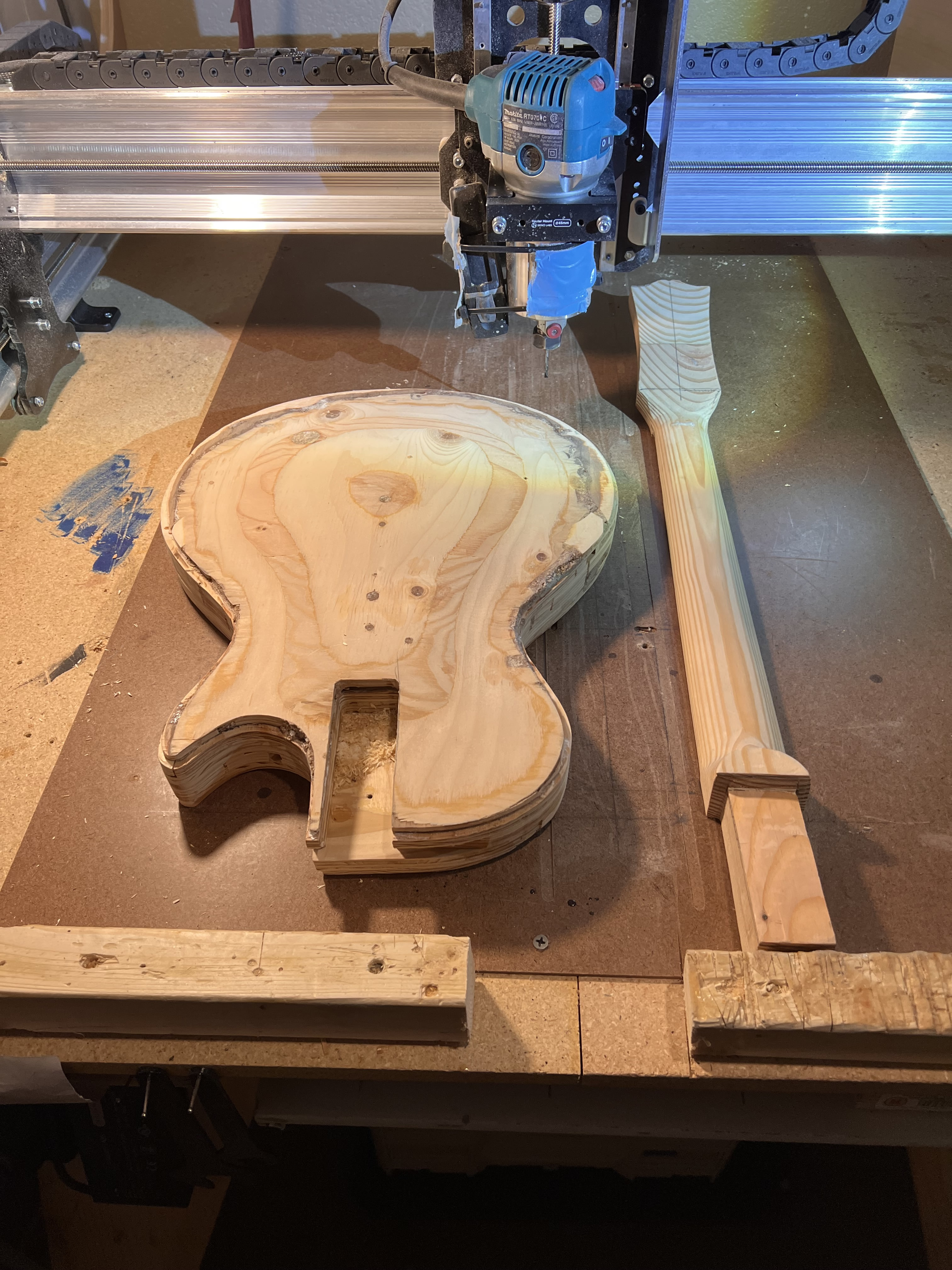
@JrobdStudio, that arched top on that Les Paul looks like a tough carve. Looks great! When my skills improve I’d love to give that a try.
@NewsVan, wow, beautiful work! Love the organic curves and the flat/matte finish. Impressive you have the skillset to do both guitars and basses.
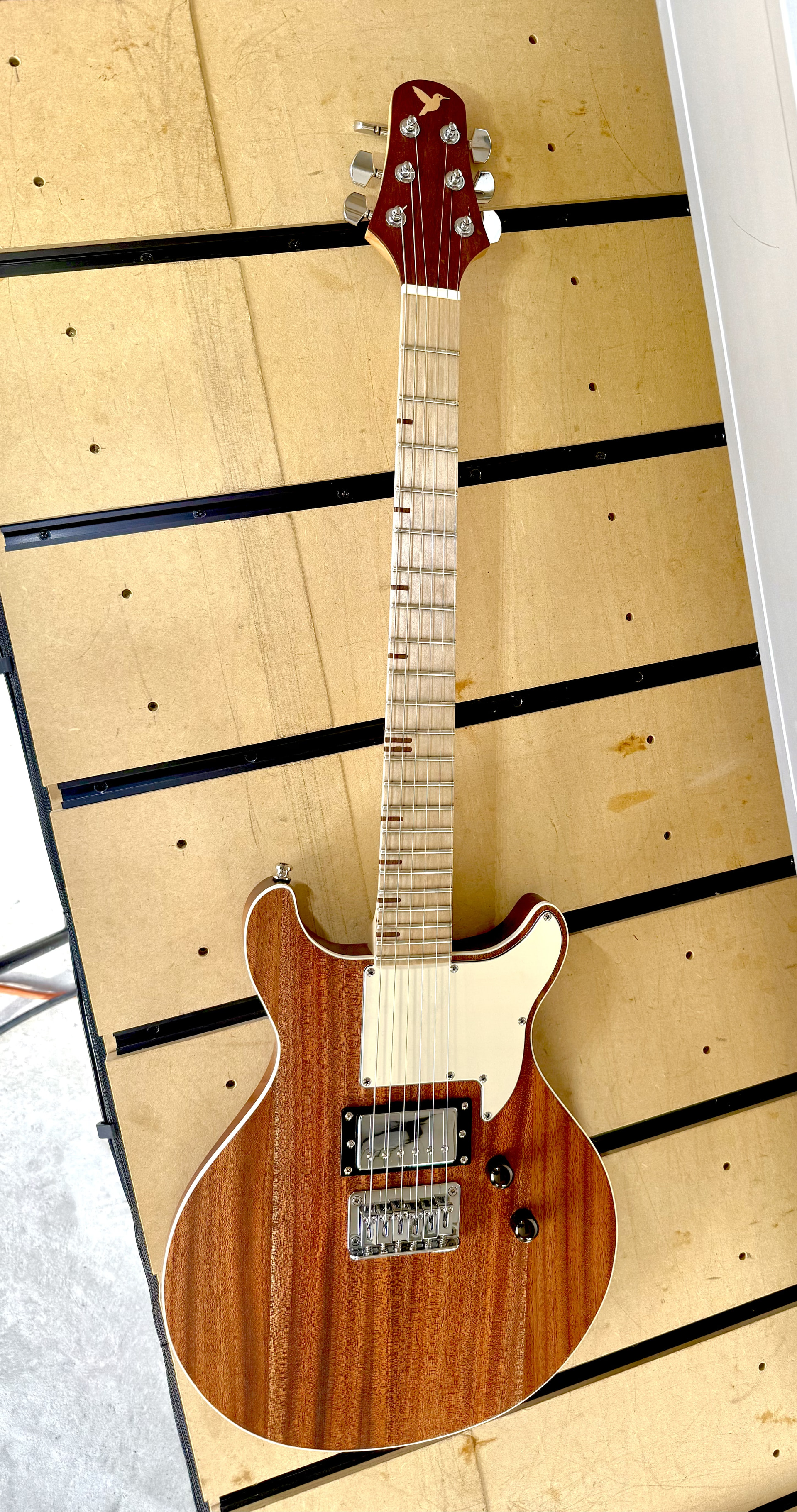
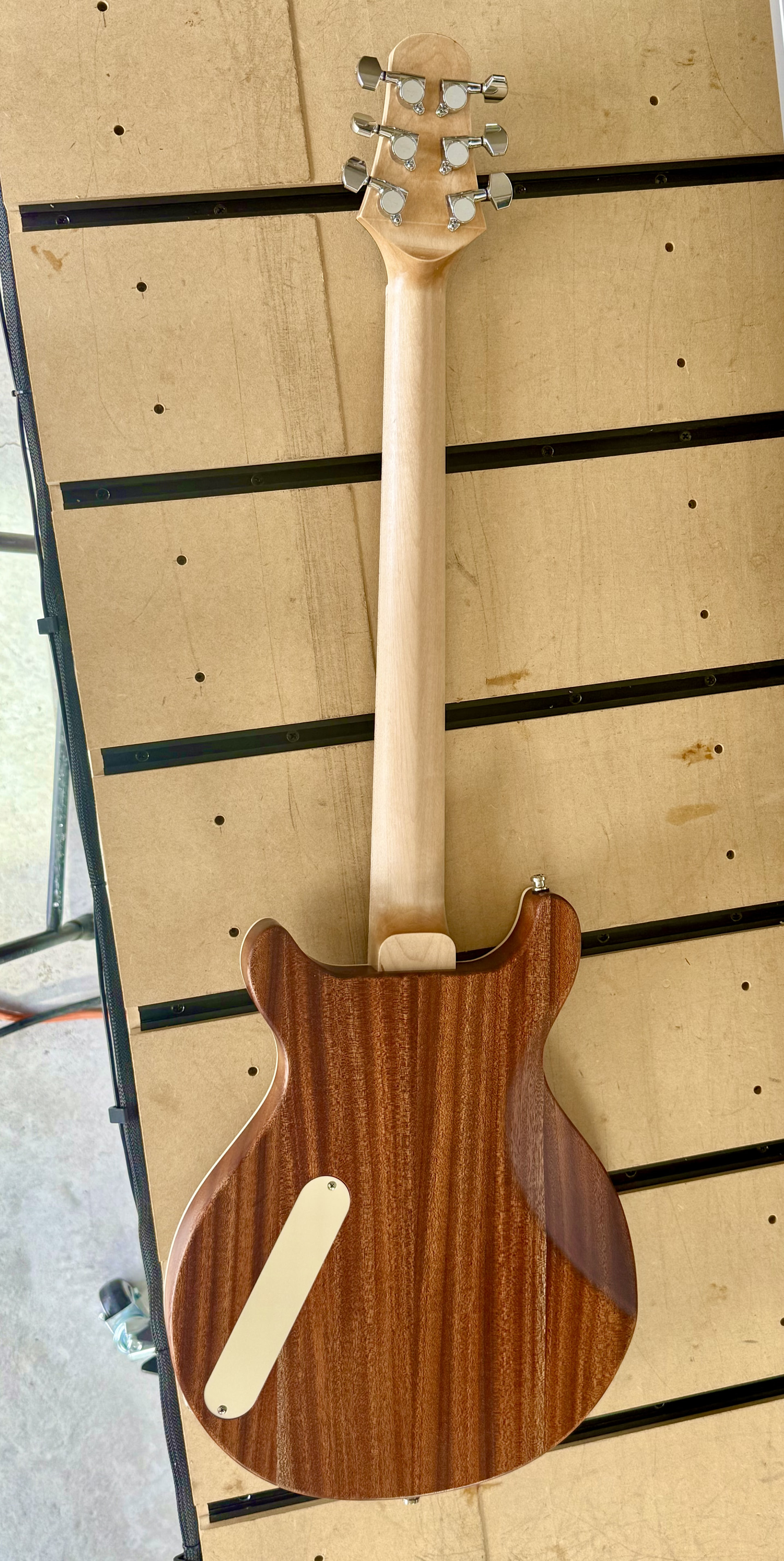
Three months ago, I took a massive leap of faith and ordered an Altmill (after using Fusion and a 3d printer for a few months). Just finished this facsimile of a '59 Gibson DC just last night. Love the open access the DC has at the 22nd fret (I modeled it from scratch in Fusion). Didn’t want to take a chance with my best wood for my first CNC’d guitar, so this was milled with various scrap pieces of maple and mahogany glued together. After the Altmill was through, all I needed was a little touch-up with 320/400 grit sandpaper and all was good. Pre-CNC, I had to use a coarse rasp, 60 grit sandpaper, and many hours of elbow grease.
That’s so cool to see how you fine-tuned your milling process for that LP top. Reminds me of the mdf I used to proto-type/practice my milling technique on various projects.
Reply to @nicholasclark’s question: I’m curious how the open 22nd fret access felt once it was actually in hand, since that’s the kind of detail that’s hard to judge from a model.
When you’re playing the above the ~15th fret, the placement of your thumb and palm is different on the Gibson double-cutaway vs. say a Gibson Les Paul or Fender Stratocaster. On the two latter guitars you must turn your thumb ~90 deg, and place the palm of your hand on the back of the body to maintain support. On the Gibson DC you can maintain the same thumb and palm position throughout almost the entire neck.
Most guitarists don’t give a second thought about the thumb/palm transition on the Gibson LP and Fender Strat. It was never on my radar—until I played a Gibson DC. Given a choice, I now prefer the DC’s “heel-less” design.
Reply to @sarahrobinson: . . . ash and poplar, do they feel noticeably different in weight and balance?
Ash is heavy. If you gig regularly, poplar can be a more comfortable option. On the flipside, there are those who feel ash provides a certain sonic appeal that justifies the weight.
You also mentioned sustain in your post. If you like a Carlos Santana type of sustain, I’ve found an all mahogany guitar/neck combo supports sustain very well. The mahogany body and maple neck I used on the Gibson DC provides a good bit of sustain with a bit more high end or brightness due to the maple. I might add a “set neck” (neck glued to the body) tends to offer more sustain vs. a neck attached to the body with screws.
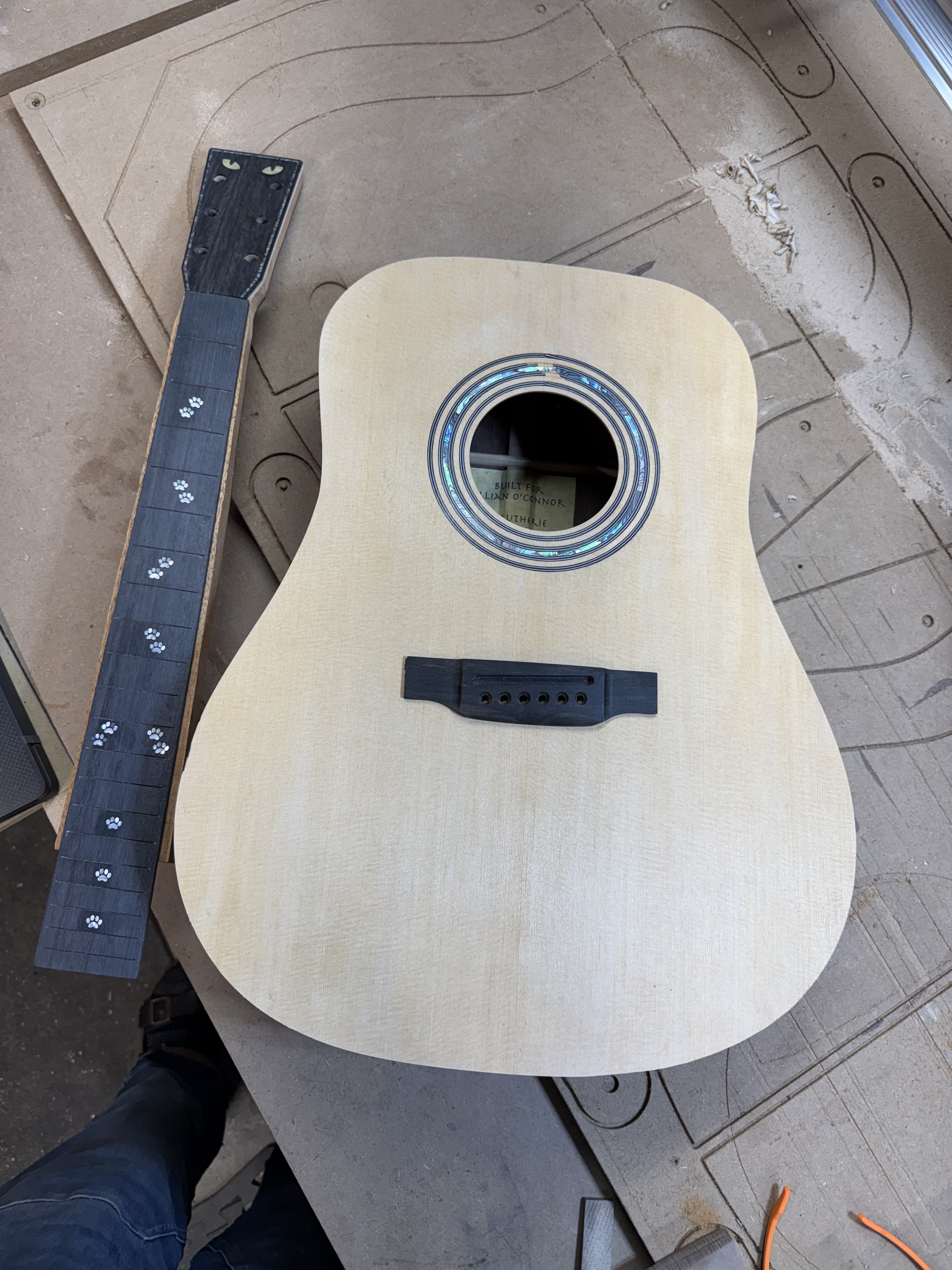
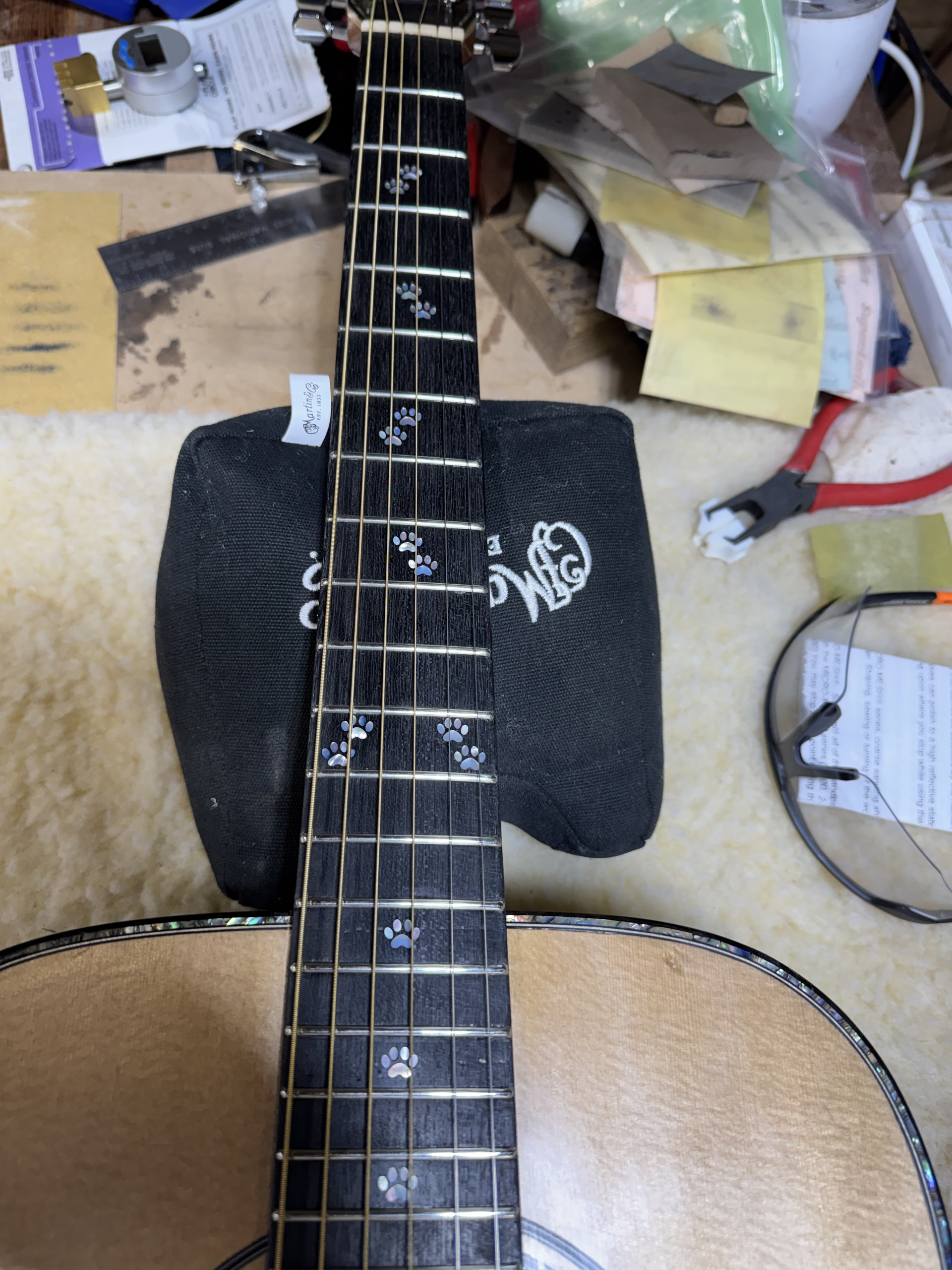
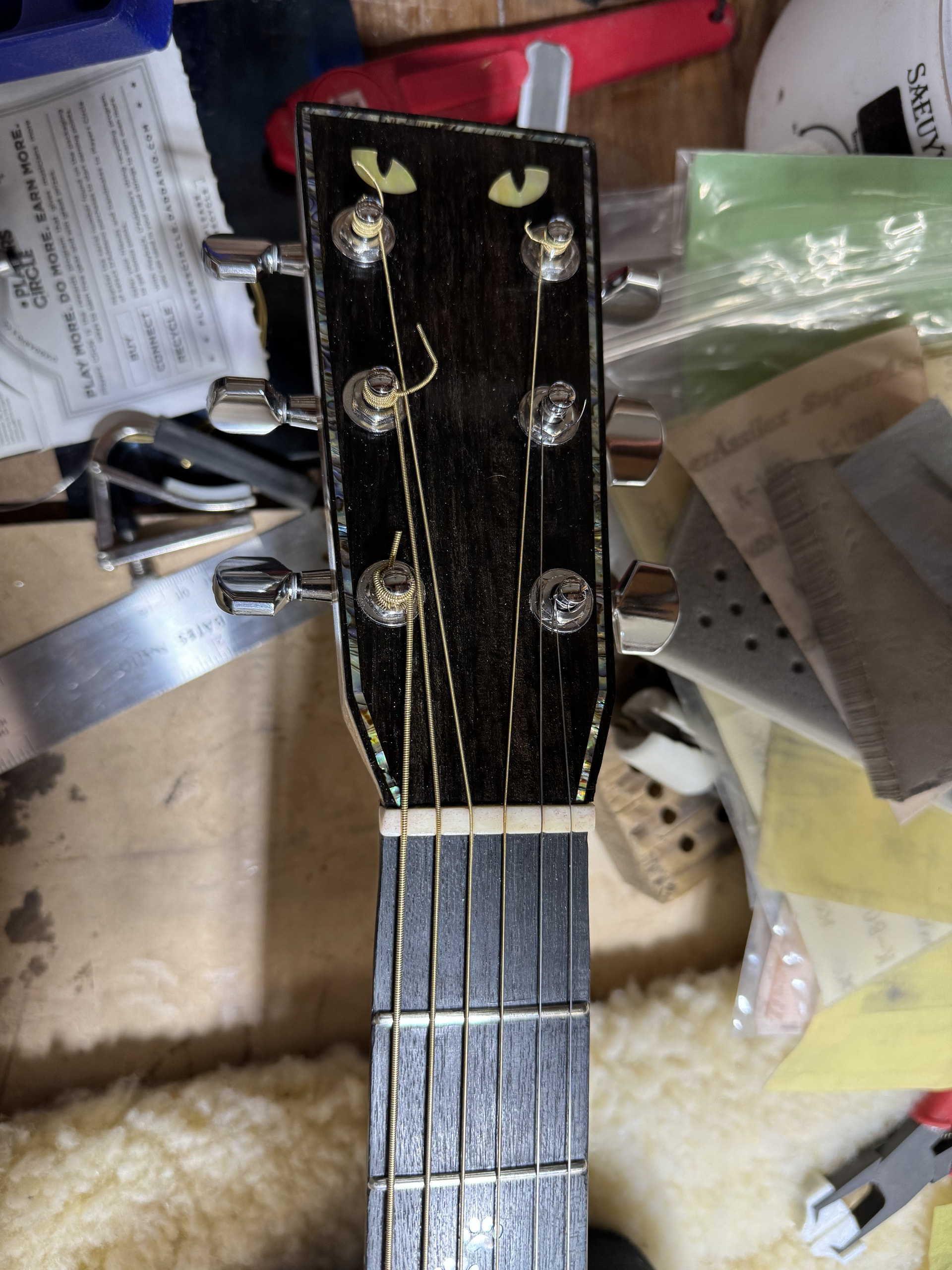
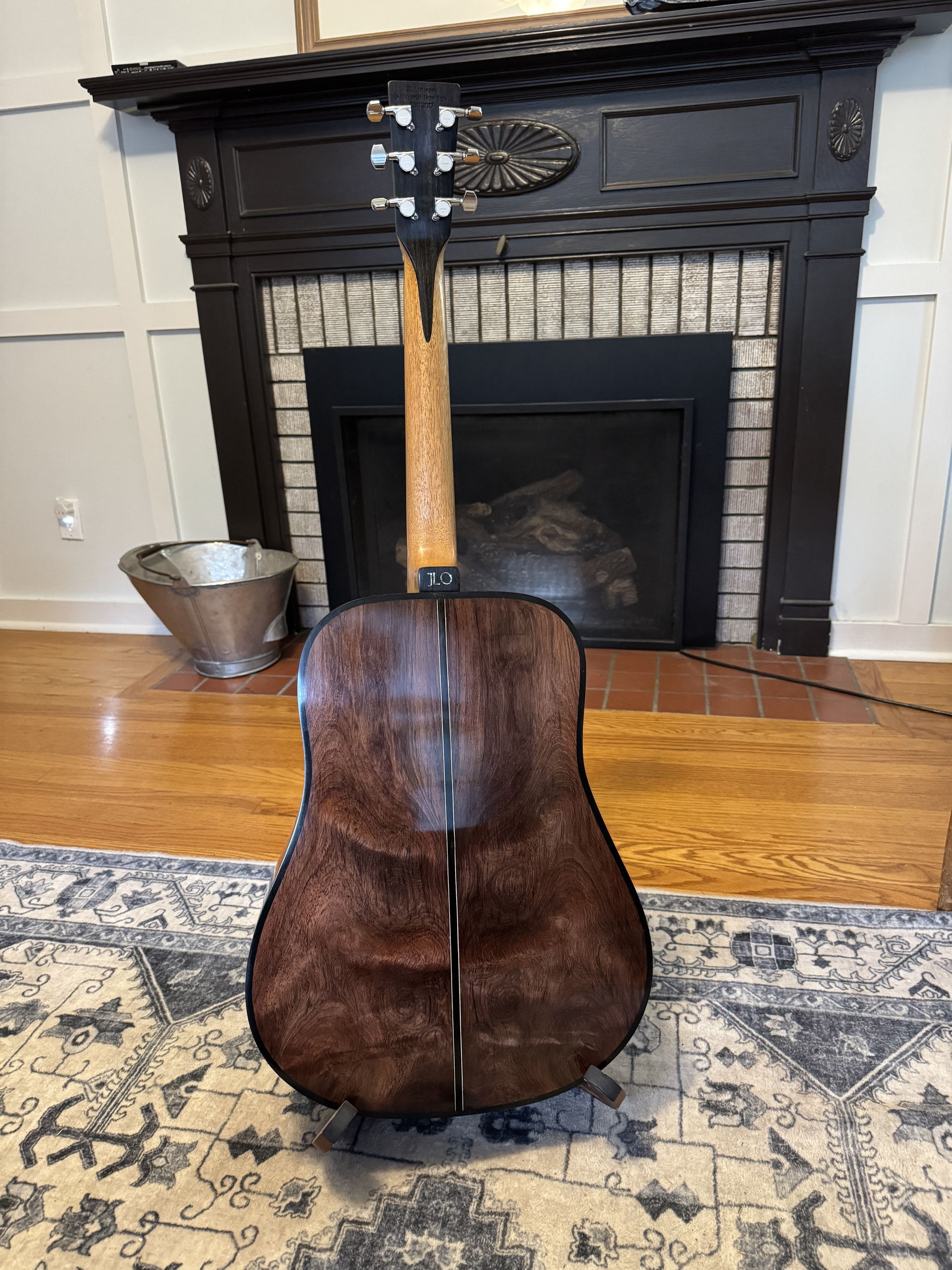
Beautiful work, guys. I haven’t made an electric yet, but used my Longmill (since sold, upgraded to Altmill 2x4) for fretboard, bridge, and inlay on this dreadnaught I built earlier this year. The main reason I got into CNC is that I want to do a quality of inlay work that I don’t have enough tomorrows to be able to acquire the skill to do by hand and Dremel.
Beautiful, @nsmorgan! Love the headstock inlay—very tastefully done! No doubt the paw prints took some time to do even with the CNC.
A number of years ago I built a few acoustic guitars by hand. They’re infinitely harder to make than an electric guitar. Congrats on a nice looking guitar.
How did you bend the sides? What kind of neck joint did you use? Have you given any thought to using the Altmill to mill the neck/body joinery? I suppose workholding would be the biggest hassle, since you’d probably have to mill the neck and body vertically through an opening in the wasteboard.
Thanks! I did a mortise and tenon neck joint and a scarf joint with a back strap for the headstock. I often think about using the CNC for neck carving but it doesn’t seem efficient to me unless I want to make the same neck again and again. I build each neck to the player’s specs—some like it shallow and narrow and some like a baseball bat (like an old Gibson). I might try to figure it out just because it would be an arrow to have in my quiver.
Very nice! That book-matched back and highlighted backstrap are especially striking. I have a few sets of book-matched rosewood and bubinga sides/backs I cut out on my bandsaw years ago. Hoping to build another acoustic at some point. Like you, I have a limited number of tomorrows—inching closer and closer to a now or never scenario–lol!
Not sure which CAD program you use, but in Fusion I can change the overall taper of a neck in a matter of minutes by just changing/moving the sketch dimensions at the nut and heel for the back side of the neck. Fusion automatically aligns the surrounding sketches and recalcs the 3d bodies (i.e., the entire neck) after the change is made.