New poster, so if this category is not appropriate, the moderators may freely move it to where it best belongs.
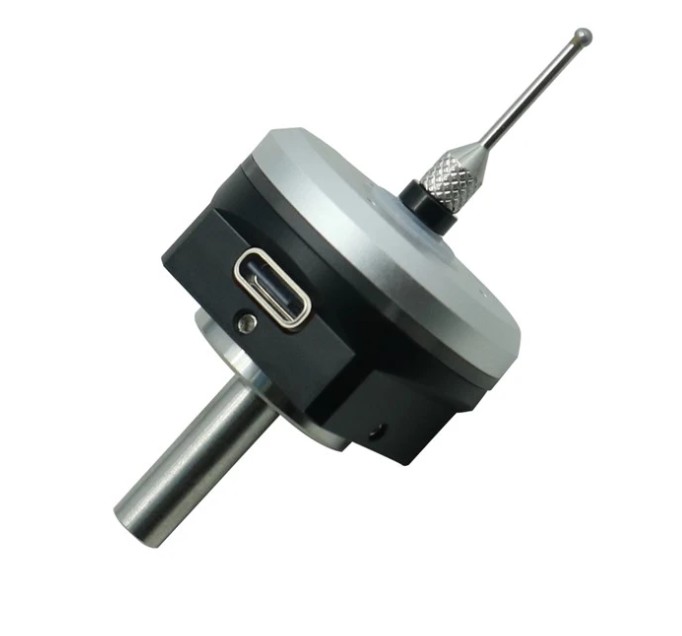
I am trying to capture the surface profile of a 1956 Gibson Les Paul. The shop has (had) a Next Wave Shark HD4 that offered a (limited) digitizer probing routine, the results of which had to be sent to Next Wave for conversion to a normally recognized (i.e. useful) file format for CAD processing. The probing routine was simple; enter rectangular work dimensions; enter enter digitizer x-step increments; enter digitizer y-step increments; run the program, save output on a thumb drive, and send it off. Nothing was transparent, because EVERYTHING that involved Next Wave was proprietary. So I have no clue how, what, where, when, why, anything was done. The worst is that we have this nice digitizer probe that Next Wave absolutely refuses to give anyone any technical information as to its specifications; because it’s proprietary, you know.
We dumped the Shark and now have an Altmill Mk 2, of which I am extremely impressed and beyond pleased. But … I still wish to probe the top of that Les Paul.
So looking for a routine that controls digitizer probing of an arbitrary dimensioned workspace with compound surface curvature. Anyone out there who has recommendations, suggestions, pointers, appropriate wiccan or tribal rituals, please feel free to respond. I am an amateur at this CNC stuff so please don’t assume I know all about the basics.
@JWalter ioSender and ncSender both do surface mapping, 3D mesh, height mapping, or whatever else you want to call it. But it might not do want you want it to do.
I’m guessing you want to do the surface mapping and then export that to a 3D file like an STL.
What ioSender and ncSender both do is map the surface contour of an object and then apply z corrections to an existing g-code file. You’d want to do this when your toolpaths expect a flat surface, but your surface is not flat. The height mapping corrects for that.
I don’t think either ioSender or ncSender will reverse engineer the g-code to make an STL. I did a quick Google search for g-code to STL conversion and got a few hits.
I was thinking some sender must be able to do this as the format for an stl file is dead simple. So simple that even I can write code to load and save them.
@Chucky_ott Thank you . I’ll look into those 2 sender routines and/or see what else may be out there. Yes, straight forward surface mapping with an export to STL, or 3DM, or similar. One of my old files loads into Rhino as a surface mesh; i.e., smaller the grid spacings, better the resolution. From there just smooth, and eyeball tweak the curvature. Woof. Old dog new tricks.
@JWalter I finally purchased one of those probes and will try the 3 aforementioned senders to see what they can do. I’ll post back here once I receive the probe and do the tests.