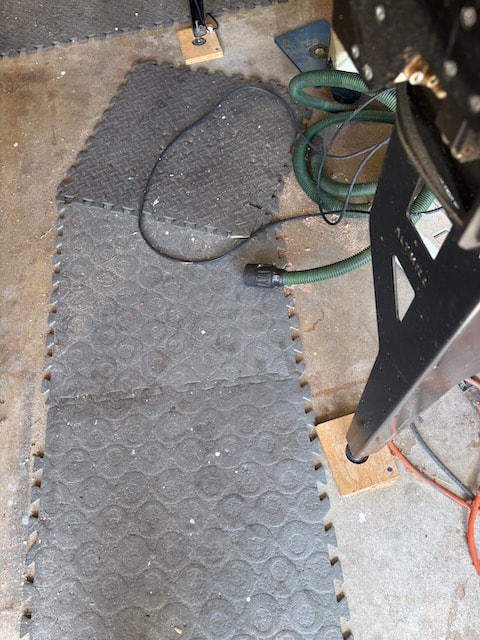
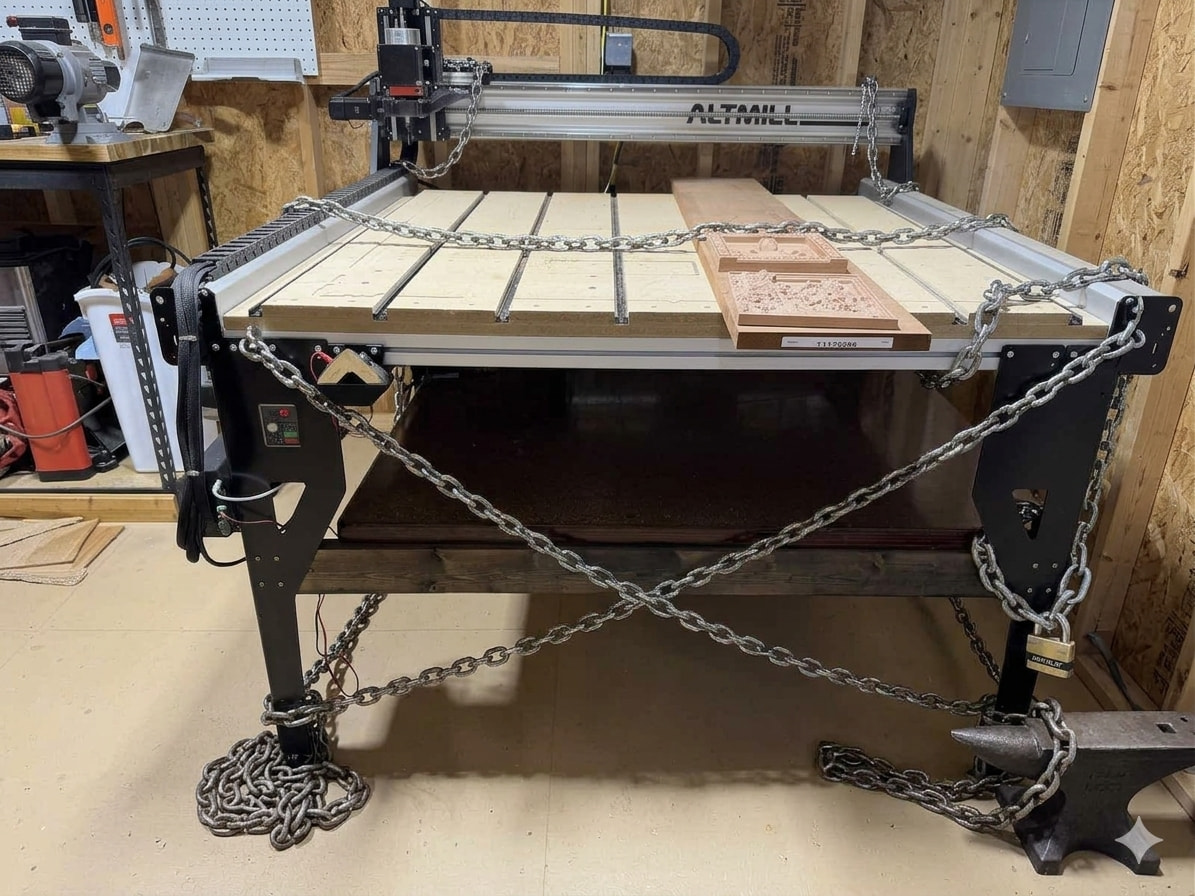
Do any of you have issues with your Altmill sliding across the shop floor during cuts with lot of rapid movement? If so, what have you seen to be the most effective solution for resolving: A) leg stiffeners, B) platform + weight below the top (e.g., “Altmate Altmill drawer setup”), C) Other? One thing I haven’t seen on the forum is folks connect their Altmill base to a wall through some kind of tie point. I have thought about this to keep my base open for shop storage, but won’t do this if there are better solutions - or - tying the base into the wall has notable downsides (beyond making it more difficult to move around).
Background:
-Just received and assembled my Altmill in my garage; replaced the supplied levelers with leveling casters (wheels with ratcheting leveling feet). My garage floor is fairly sloped, so I have ~1" shims under the front feet.
-While milling dog holes into the spoil board my Altmill slid several inches across the floor during high acceleration events; since the cut had dozens of dog holes this compounded fairly fast - leading the machine to almost fall off the shims.
-Normal cut jobs seem to experience as much sliding due to less aggressive movements.
Thanks ahead of time for anyone who takes the time to read and comment.
I use a combination of things. The legs are tied together and there is a shelf with wood underneath which adds substantially to the overall mass. I still run into situations where things are moving too much for my comfort and I just turn down the feed speed.
I have thought about tying into the basement wall but have not tried it yet since slowing things down works fine.
@Matte My Altmill doesn’t slide because it’s on the carpet of my “finished” basement (previous owner finished it but I use it mostly for storage).
But it does (did) shake a lot during rapid movements. Since adding leg stiffeners, it barely moves.
There are many methods you can use. From simple diagonal braces to a full cabinet. I’m sure the mass from a cabinet/shelf and all the contents help dampen things too.
@Jens@Chucky_ott Thanks for the feedback. Ran some additional projects in the last few days and thankfully the machine sliding across the floor seems generally isolated to only the doghole cutting so far (though can see the significant benefit of some kind of mass or stiffeners still). That will give me a little time to figure out use the machine more before deciding what solution will work with my shop & workflow the best.
Yes, dogholes have to be done slower. I recall when I did my dog holes … I turned the speed down in a hurry (after staring at the thing for way too long trying to comprehend what the hell was happening).
When I first setup my LongMill I attached my table to an interior basement wall. When I fired up the mill I couldn’t believe how loud it was. My first thought was ‘I’m never going to be able to use this if anyone else is home’. The other side of that wall is the staircase so that may have been a contributing factor to amplification of the high frequency router/bit noise.
Now that it’s not secured to a wall I can use it when people are sleeping.
Hey Matte.
Here’s my simple solution that has worked for three years and also allows me to use the height adjustable feet included with the altmill. Scrap plywood tap con to the floor on all four legs. Just pick up and move if necessary.
@_Michael Thanks for calling this out. Makes sense but I didn’t think of it before. If I go this path, definitely will need to put sound deadener pads between connections to help.
@Scottp I did something similar → made some 6x5" feet to put under my table, covered the bottom with non-slip. Table feet are cut into the plates. Planning to install in a few days to see how it goes.