Hi everyone - complete newbie to CNC for home projects. I’m considering getting the 48x48 Altmill.
My main driver is that I need to produce 50+ plywood drawer boxes for various cabinets, built-ins, closets, and potentially, furniture for around the house. That doesn’t include the many other shelves and other panels for the cabinets.
My current flow is tracksaw, followed by router table. I’ve been making a few of the cabinets now and it’s just a huge amount of cutting - slow progress and it seems I can only manage to do it on the weekends. Continuing this way, I would also need to invest more on tools to speed up my process.
I read thru some posts on issues/solutions here for cutting multiple nested pieces, such as drawer fronts. That concerns me only a little - I expect a learning curve and experimentation before I can get going. But OTOH, maybe I’m missing something - maybe lots of pieces are impractical w/o an expensive vacuum system.
For this very narrow task (I’m also excited to build the many other cool things with a CNC), do you think I’m better off making a ton of drawer boxes and fronts with a tracksaw/router flow, or with an Altmill?
I bought my mill because I needed custom drawers. I couldn’t get the required sizes commercially and even if I compromised on sizes, the cost was ridiculous. Adding the fact that I always wanted a CNC mill, I decided to buy the mill and make the cabinets and drawers myself.
What I learned was that it took me a LOT of extra time to build my stuff using the CNC. There was a steep learning curve for operating the mill but also learning CAD/CAM. The CNC cut materials will be way more accurate compared to me doing things manually (I am somewhat accuracy challenged when it comes to wood). Accuracy was high on my list of requirements.
To sum it up, for the single task of drawer boxes and fronts, you will likely save time doing things manually but the end result might not be as accurate unless you are good at woodworking. Maybe you can overlook minor dimensional errors if the end product doesn’t need to look like it was produced commercially.
On the other hand, if you have always had an itch for a CNC mill, this is a heck of a good excuse to buy one.
Yes, there is a LOT of learning involved and that takes time.
A good vacuum system to do largish panels will cost you way more than the mill. Sienci is working on a vacuum system so that is something to watch.
You can get away with nesting if you use tabs BUT a large piece of stock will never lie completely flat unless it is sucked down with a vacuum table. There will be noticeable tolerances for the Z axis in your end product. You can use various tape methods but doing this in a semi production environment really is not practical.
@Jens What @Jens said. You need a way to keep plywood (or whatever sheet good) flat, especially if you’re going to cut dadoes. It’s probably not as important for cutting the outline of your pieces, or to drill holes. But for dadoes, you need flat.
A vacuum table would be great. Otherwise you need another method.
One way, especially if you have holes going through the workpiece (for example door pull screws) is to use that hole to drive a screw into the spoilboard to keep your piece flat. If you don’t have holes and the work piece will not be visible (e.g. cabinet sides), you can still screw the workpiece down.
Keep mind that not all tasks need to be done on the CNC. While you can use it to cut your pieces perfectly square, you can use a hand held router or table saw to cut your dadoes.
I’ll be doing my kitchen cabinets at some point in the future. I’ll need a hold down method at that time.
For dadoes, I introduce extra ‘fudge factor’ during the CAD stage. In other words the dadoe is a tad deeper than the male bit that goes into the female bit. This works in most cases.
I think you just became an Altmilly (Just made that up and I love it) , welcome to the club.
Just think of all new designs you can do for your drawers, and I found that once you start and master the Altmill you go on to thinking of tons of new things to make. I find that it really does become the center of the shop.
Yes - I came across some of your posts on the topic of securing the sheet down. I think it makes sense to have an initial run to register screw holes that can be used to keep it flat and tied down. Using my router table, the dadoes and rabbets are always a little off anyway.
Hopefully I’ll get to join your club. It’s just the cost thing…
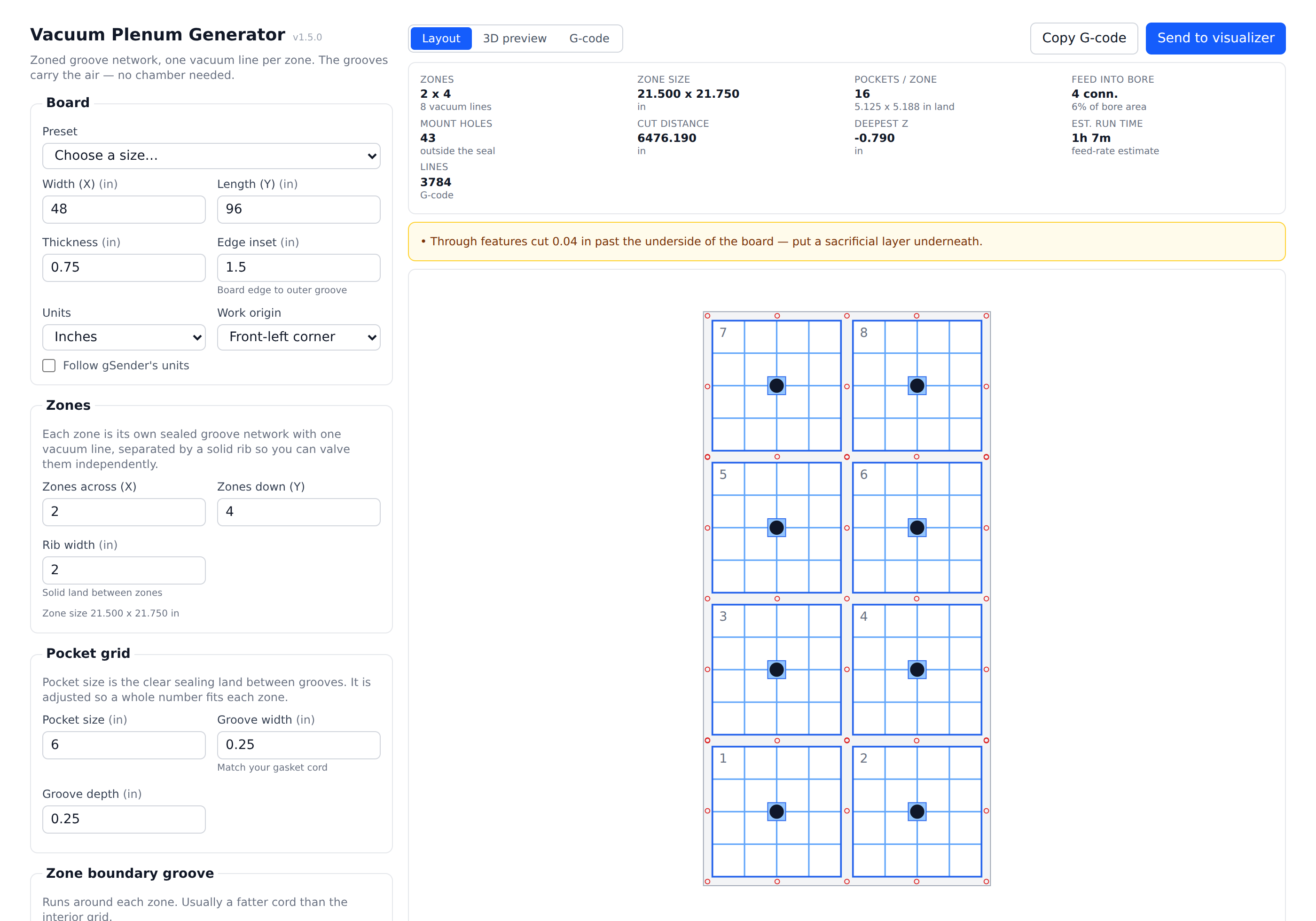
i would suggest you look strongly into 4x8 one. for sheet goods i think its a better choice as you can use full sheets of plywood and don’t have to break them down. you do need a vacuum table. you can get hurricane pump and build your own plenum. One guy who does cabinetry for a living uses 4x8 altmill with atc and vacuum setup. works pretty good. He is also working on plenum design plugin for gsender. I just tagged him here to weigh in @NickHB
Howdy, I got tagged here. Couple things right off the bat! I’m an affiliate so I’d be happy to get you set up with a machine but also I’m a cabinet maker first and foremost. Alex and a few others I stay in contact with have been people I trade info with back and forth and help where I can. I do my best to give what I take.
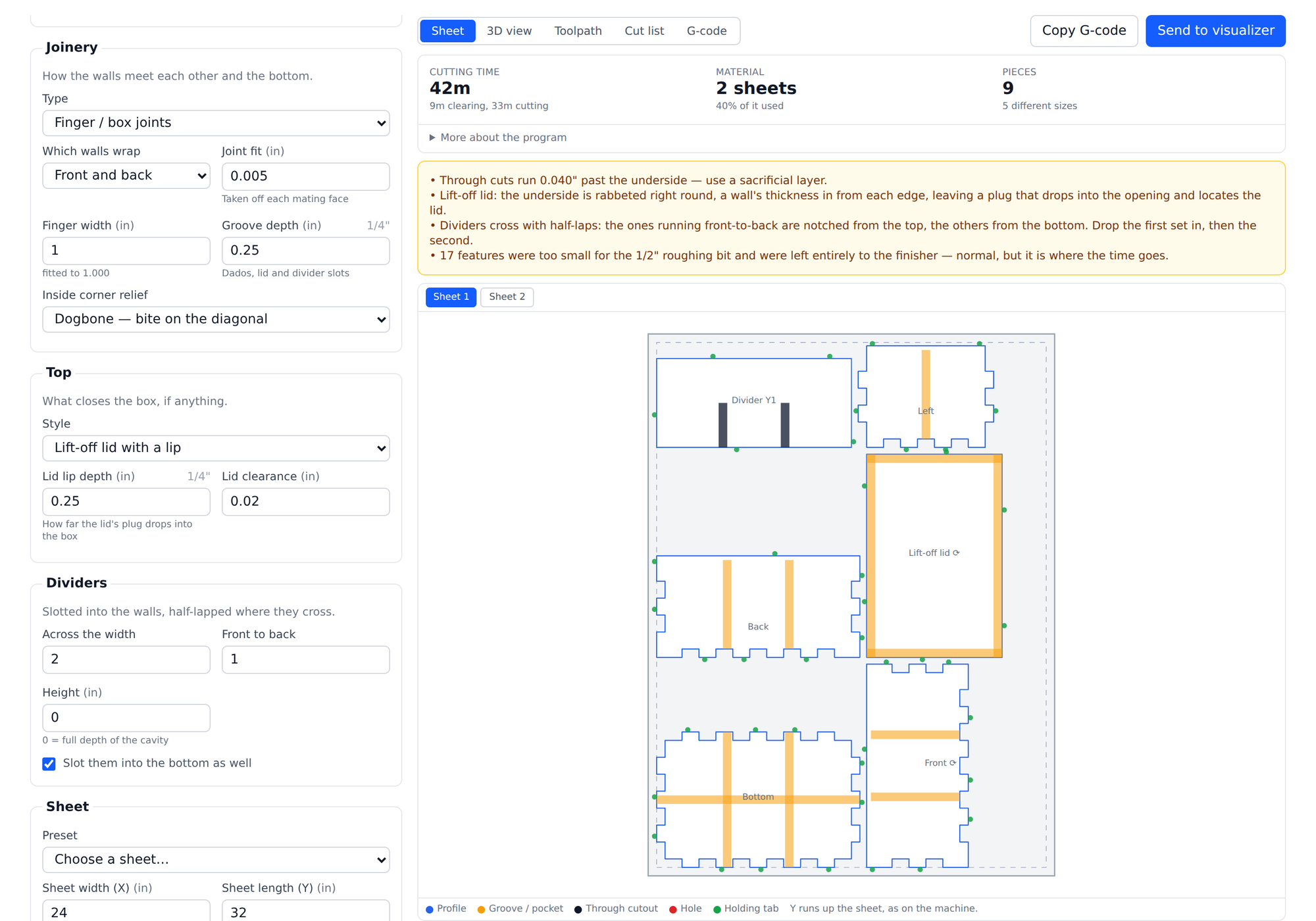
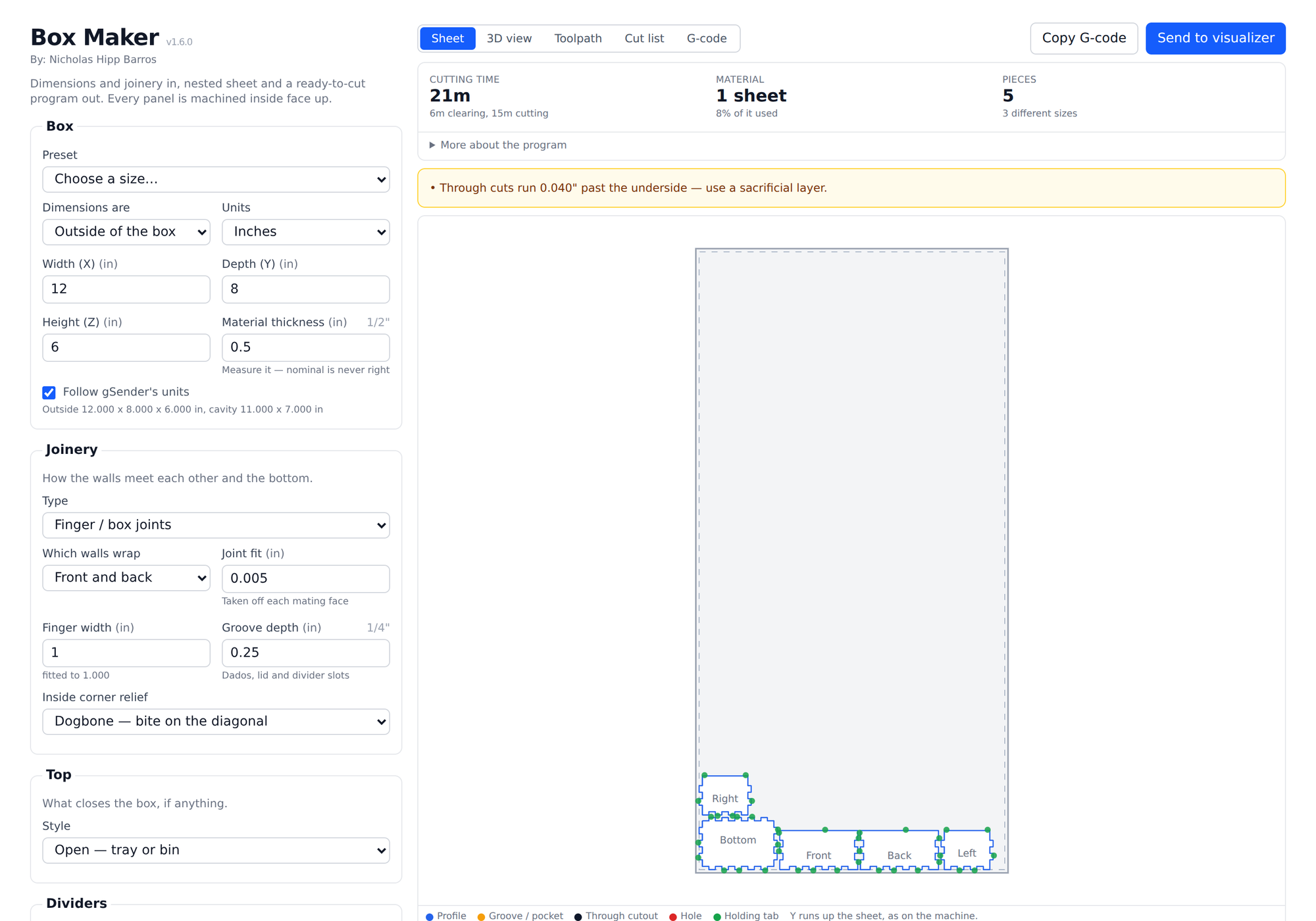
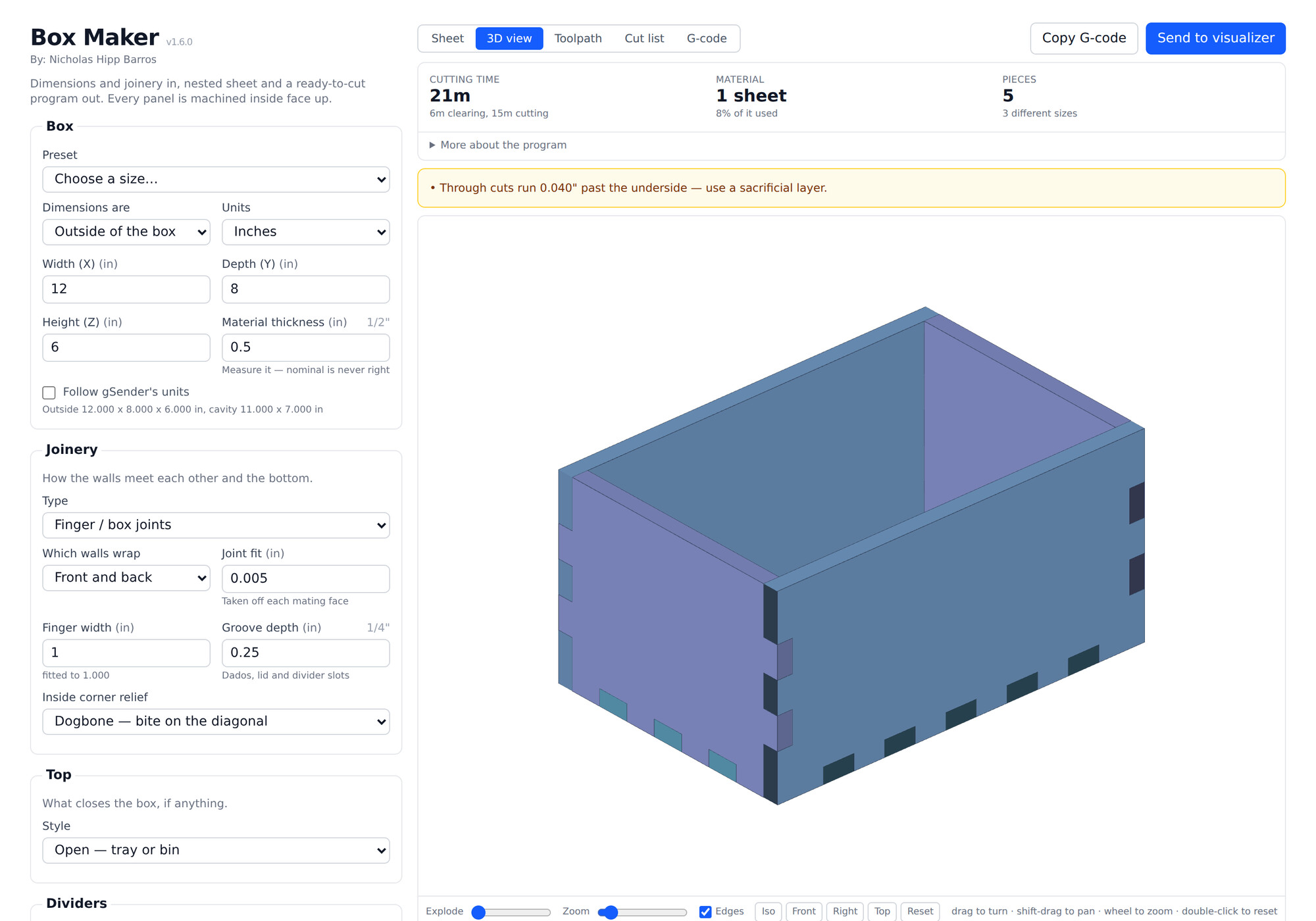
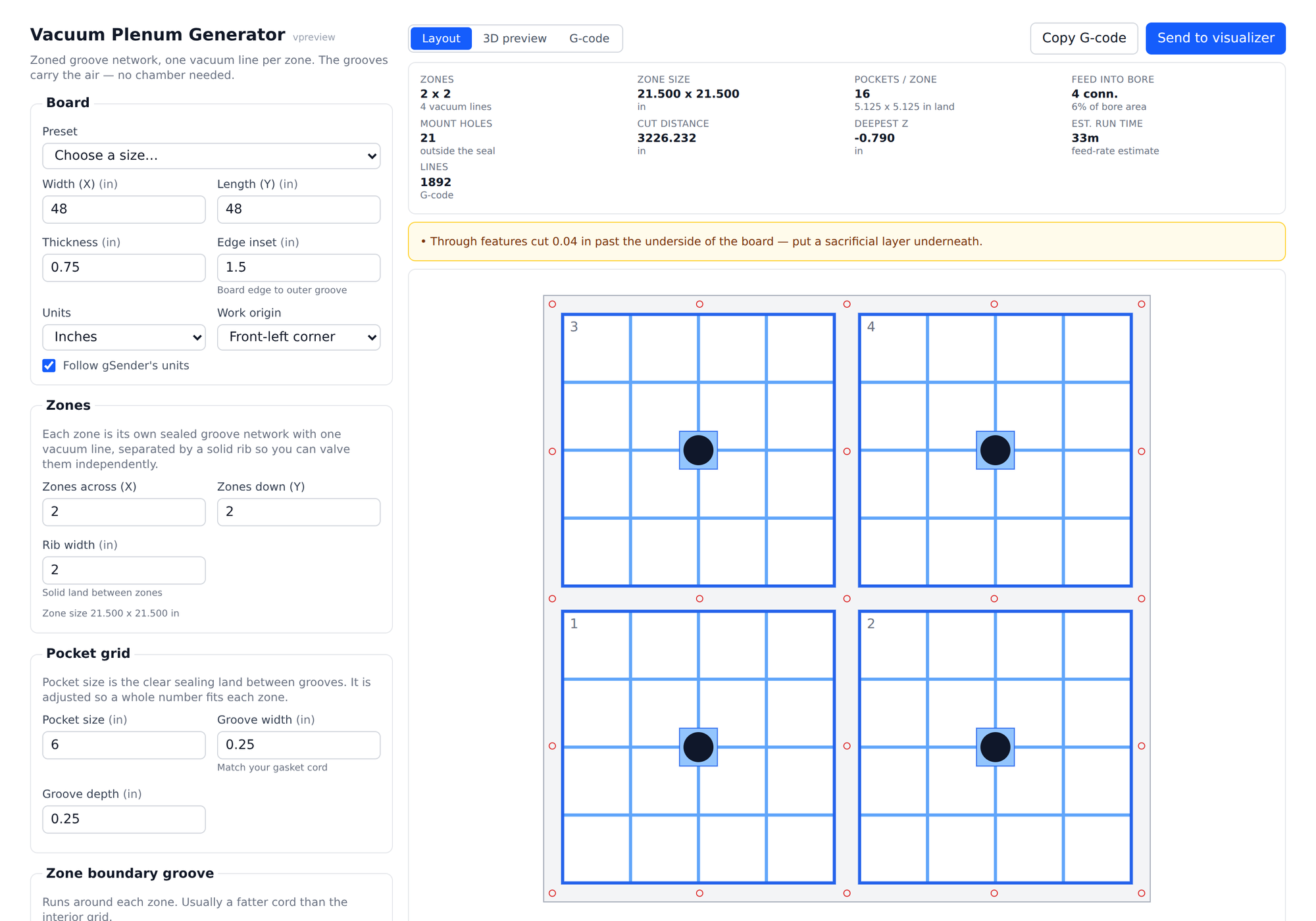
As Alex mentioned I’m working on a plugin for plenum design but interestingly Enough I’m also working on a box maker plugin for gsender. If you are familiar with maker case it’s very similar. I have attached a few photos for you to check out but look me up on Facebook Nick Hipp-Barros. I’d be happy to answer any questions you might have. The plugins are still very much in testing and debug phase so not quite ready for prime time but they are working.
I just bought an AltMill 4x4 to do the same thing. I’m building cabinets for a miter station out of 10-ply Baltic birch. I also picked up a Bauer dust collector from Harbor Freight and am amazed at how well it works. I don’t have a vacuum table (although it’s on my list) — I simply use screws to hold the sheet goods to the spoil board.
The first day was slow, learning the ins and outs of VCarve, but since I’m doing the same tasks over and over, it’s become second nature in a very short time. Pockets, dados, and profiles are the same across the cabinets, so it really just comes down to the size of the piece being cut.
I’ve built cabinets with a table saw, router, etc., and have personally found the AltMill to be much faster in the long run. The fact that I can reproduce the same part repeatedly and with accuracy is a game changer.