Everything is working now
TL;DR All problems were solved with shielded cable and 1mkF capacitor between GND and 24v wires
I was finally able to solve all my problems now. I did further investigate with oscilloscope and tried to test different system in isolation to reduce number of variables. Here are the results:
- The power brick is actually OK. The noise I was observing was coming from step motors. The clue was that the interference mostly started after you use step motors in some way, e.g. move machine or use spindle. I figured that after machine comes to stop there is still some signal to hold motors in place and not to allow any unexpected movements. You can check whether you can move the spindle, for example, by hand when switched off and switched on. You can’t move when power in on due to holding voltage on the motors. It’s still a mystery why the noise absorbed mostly by 24v wire and much less by PWM wire. Maybe it’s just more visible on 24v since it’s a steady signal and PWM rectangular signal contains virtually all frequencies. Maybe it [also] depends on how AltMill’s motor cables are constructed and whether they are shielded or not
- Grounding will depend on how you mount laser module to the machine. K60 has true ground meaning that ground wire is directly connected to laser aluminum enclosure. If your mount is conductive as mine, you will connect GND to the machine itself. That is, there will be no electrical resistance between GND and any part of the AltMill. SLB-EXT however does not connect its GND to the machine. It does connect to the ground wire in your power outlet connector. Thus when laser is mounted, the machine body will be connected to the ground wire via laser enclosure and when laser is removed, it will not. I guess for the AltMill itself it does not matter, but having a big chunk of metal as a ground is usually good for high frequency noise absorption. If you mount your laser on a non-conductive mount (e.g. on plywood or plastic adapter) your situation will likely be different and you may see different noise levels
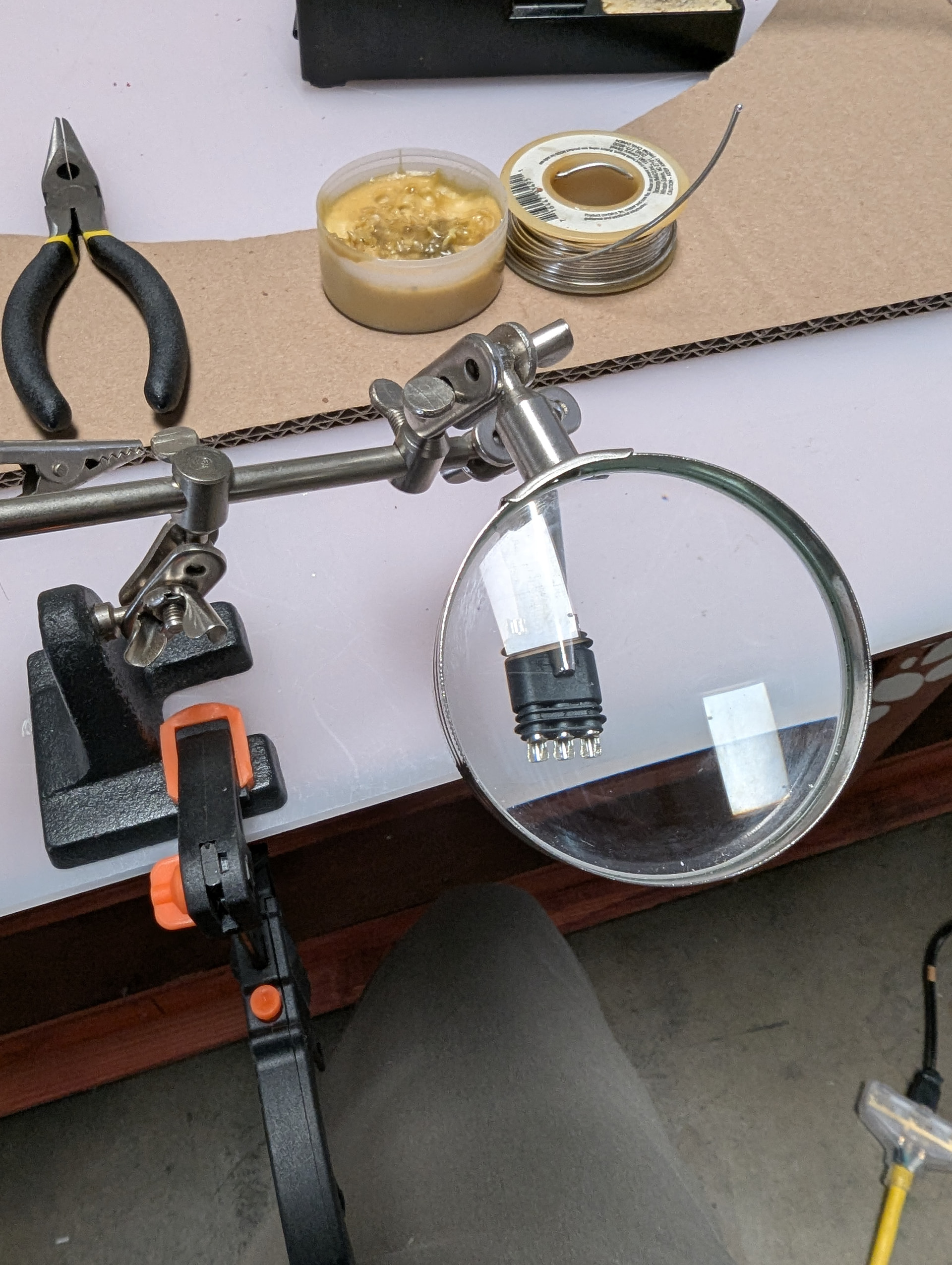
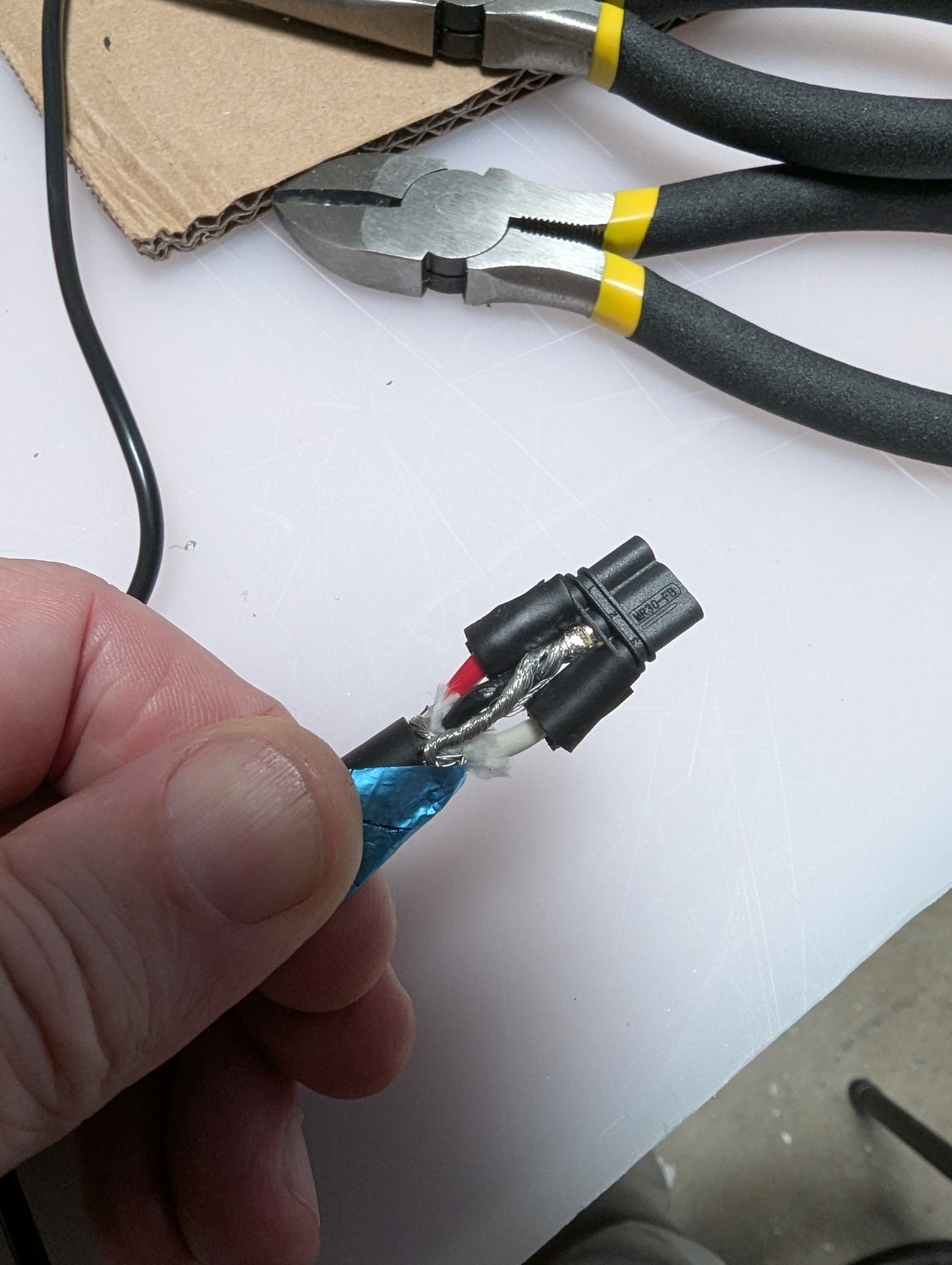
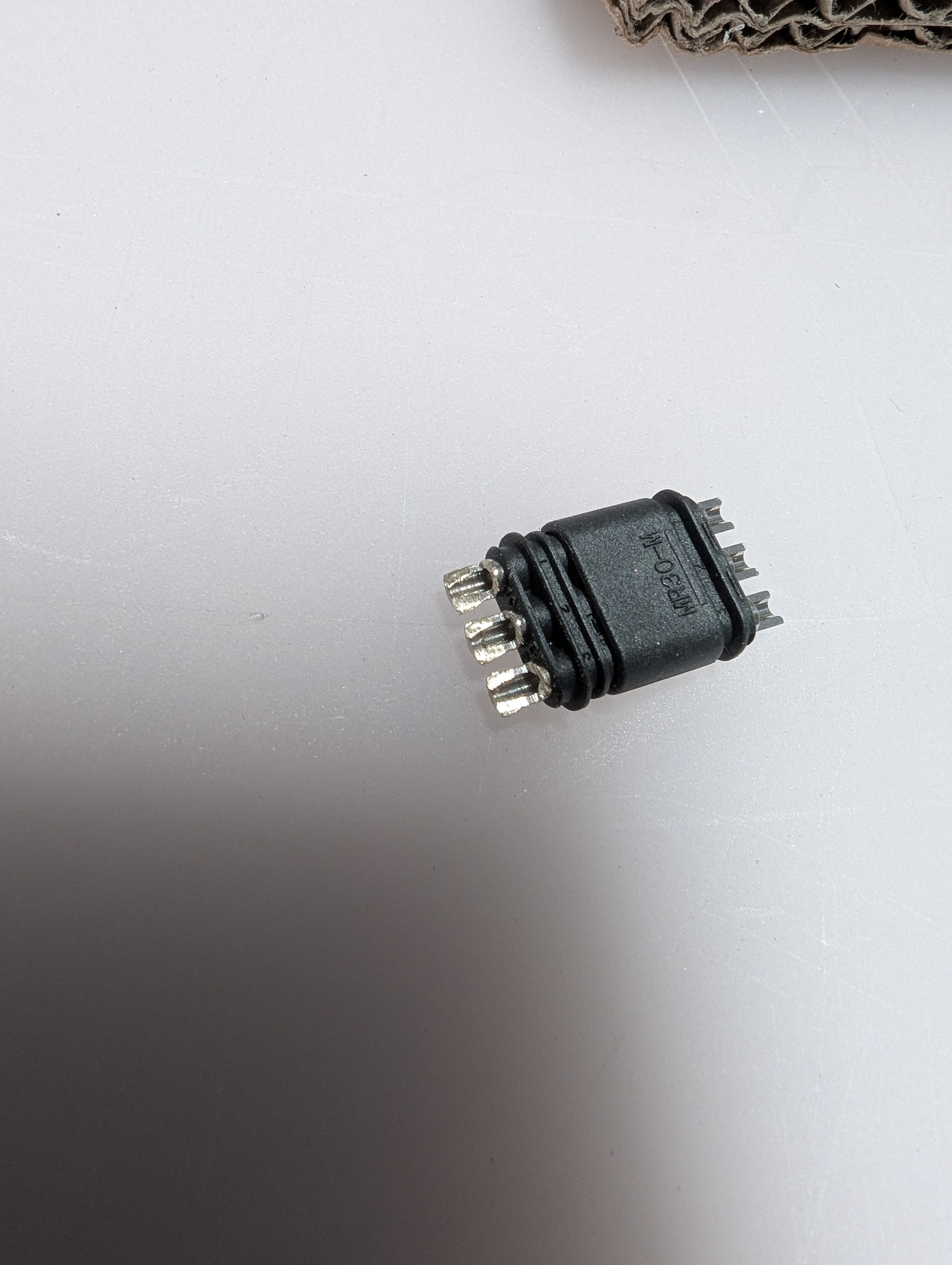
Now about the cable. K60 power is rated to 10Amp so given that cable length must be at least 6 meters I’ve decided to go with 16 AWG 3 conductor double shielded cable (https://www.amazon.com/dp/B0CR19VC9J?ref=fed_asin_title). MR30 connectors (https://www.amazon.com/dp/B0GJSBW33S?ref=ppx_yo2ov_dt_b_fed_asin_title) are recommended to use with 18 AWG wires (which are rated for less than 10A) so soldering connectors was a challenge. The connector is rather small so you’ll need some “third hand” to hold it while you manipulate the cable and soldering iron (see pictures). I recommend to partially file the metal so it’s more flat and makes soldering easier. I had to crank my 100W soldering iron up to 400 C so it could quickly heat up the solder without destroying the connector. I recommend to put some blobs of solder on both wire and connector and then quickly heat it up. It does not produce the soldering quality you’d normally after as the solder does not envelope the entire connection, but it does produce reliable result. You’ll have only one try with each wire as trying to unsolder it will require to heat up the entire metal part of the connector and it will likely ruin it. I did ruin a couple of connectors until I’ve figured this out. See the pictures.
I’ve soldered the shield to the GND on both ends of the cable which is a normal practice when dealing with high frequency noise. Soldering at one end usually used for lower frequency noise. When I’ve tested the cable there were still some small noise visible on oscilloscope. It would probably be OK to ignore that, but I’ve decided not to take any chances and also soldered 1mkF capacitor between GND and 24v wires as part of the cable. I did not want to modify neither laser module nor the adapter board.
I recommend to spread out the copper threads of the GND wire and shield threads, mesh them together and tightly wind them up together before putting solder on it. If you wind them up separately then they will likely to separate when you try to solder them to the MR30 and you’ll ruin the connector trying to fix that.
30 feet of cable is a rather too long, but I’ve used the full length so I’ll have options for how and where to arrange laser power and adapter board under or on the side of the machine later on.
Cable between SLB and adapter is easy. You’ll need connector for the SLB (https://www.amazon.com/dp/B0GJY9H6DC?ref=ppx_yo2ov_dt_b_fed_asin_title), some length of 2 conductor cable (https://www.amazon.com/dp/B0BJ63YQMT?ref=ppx_yo2ov_dt_b_fed_asin_title) and simply screw everything together. No soldering required unless you want to solder 2.2kOhm pull down resistor and 100nF capacitor to the cable. I’m not sure if resistor and capacitor are still needed, but decided to keep them just in case.
Now laser works just fine, no flashing no blinking of red cross, no problems, at least for now :-).
Hope this helps. I’ll describe my mounting plate in another post: https://forum.sienci.com/t/lasertree-k60-mounting-plate-design/26949
P.S. I did try to use DC filter (https://www.amazon.com/dp/B0B9KQW12W?ref=fed_asin_title). It actually made the problem worse. Laser was constantly firing. The magnetic interference created by the filter’s coils was so strong that PWM signal was completely distorted even it was bypassing the filter, just by proximity. I guess the filter would require serious magnetic shielding in order it to work.