When using the autozero touchplate on an aluminum project after setting 0,0,0 with the touchplate and then manually setting the Z back down to zero the bit is consistently .4mm above the part. I double checked the plate thickness in the touch plate settings and at 5mm it matches the thickness of the touchplate. Any ideas as to the cause of the .4mm difference?
@Jpdub 2 things come to mind.
- How thick is the aluminum? The lip on the touch plate is 4mm so if the aluminum is less than that, the touch plate will not sit flat on the workpiece and your z0 will be higher
- If you have a short bit, the collet may make contact with the touch plate before the bit does. This will also give an incorrect z0. The bit needs to stick out by more than 20mm.
Both points from @Chucky_ott are spot on. I’d add one more thing to check: the Z-axis backlash compensation setting in gSender. If you have any backlash compensation enabled for Z, it can introduce a small offset that shows up consistently like this. Go to Firmware Settings and see if Z backlash is set to a non-zero value — if so, try zeroing it out and re-running the autozero to see if that accounts for your 0.4mm discrepancy.
Also worth verifying the actual measured thickness of your touchplate with calipers rather than relying on the nominal 5mm spec. Small manufacturing tolerances can put it slightly off.
The material is 1" thick and I’m cutting a pocket .375 deep with a 1" cutting length 1/4" dia bit.
You said .4mm, not 4mm, right? If so, place a piece of paper between the aluminum and the autozero touchplate and try it again. Touchplates on aluminum sometimes don’t register accurately. You may need to manually set the Z zero.
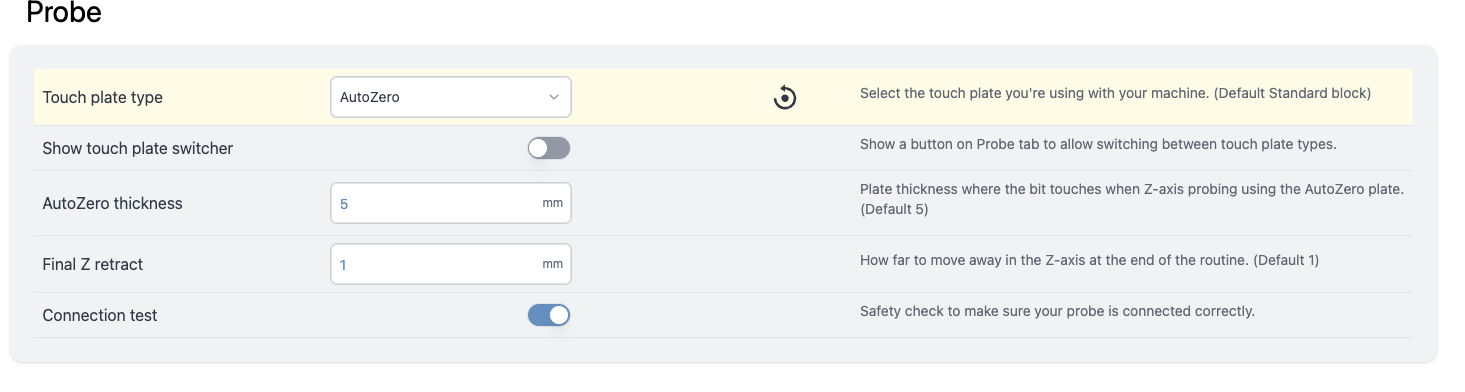
Thanks for the suggestion but I’ve since found that it’s not actually consistent. I had considered doing what you suggested, but in playing with it further and using feeler gauges I found the difference to be between .3mm and .6mm