Was doing some maintenance today and noticed the wiring to my step motors are brown. My guess is there was an electrical burn / melt from over heating. Or corrosion? Its on the yellow wire on both Y step motors. More-so on the right one. Concerning issue? Time to replace? Havent had any issues lately.
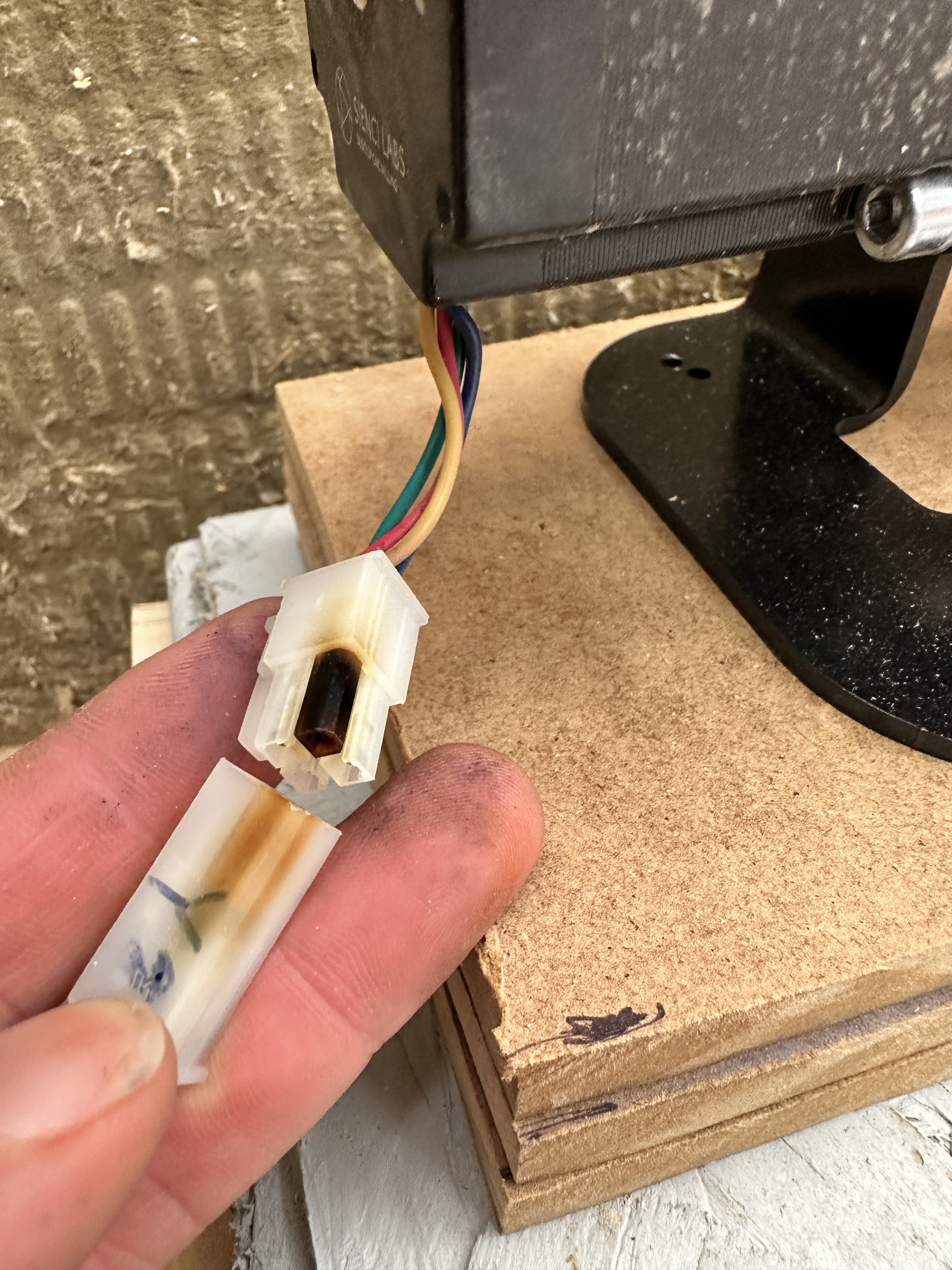
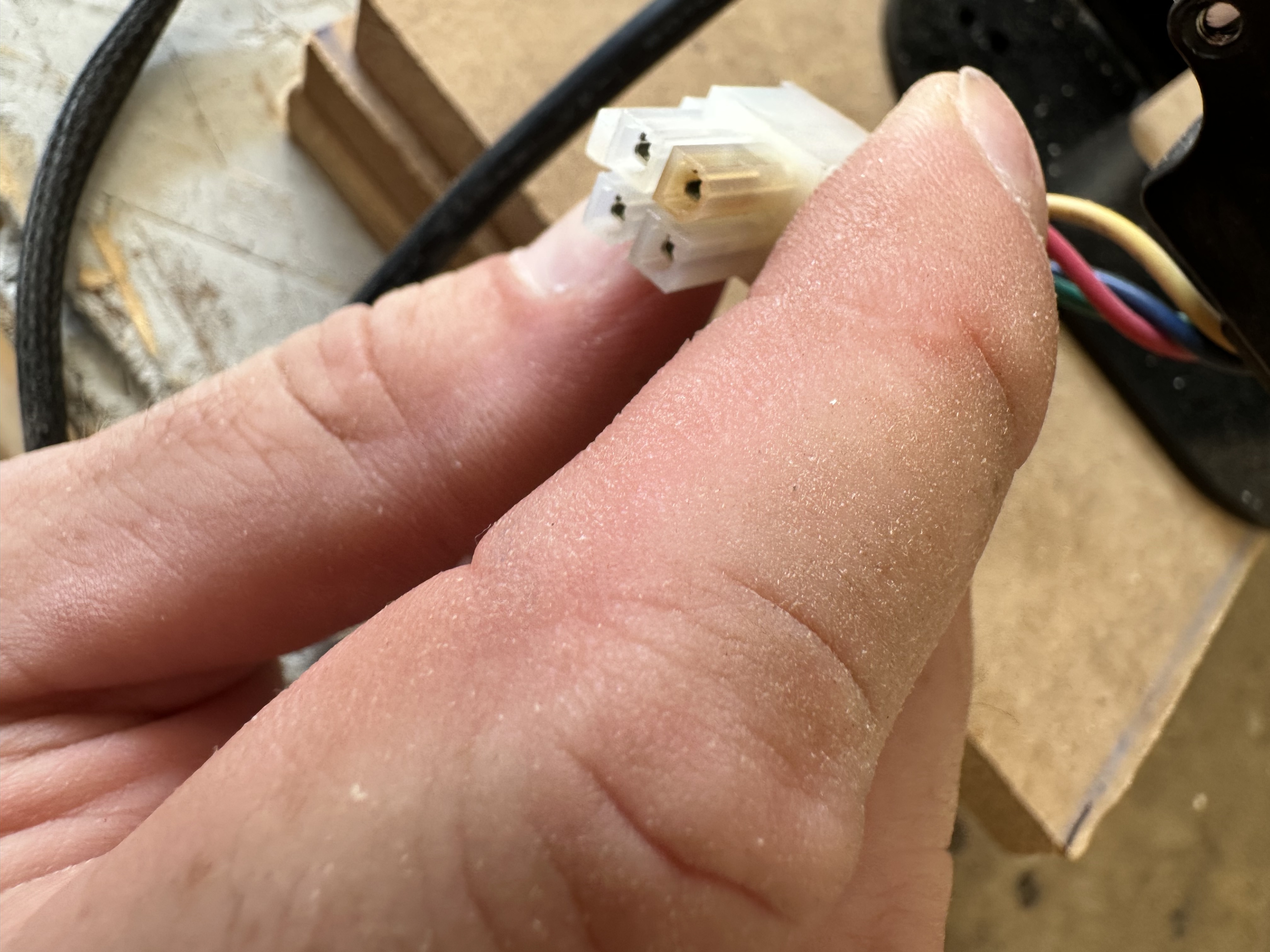
I have seen many instances of this sort of thing. It’s caused, as you say, by overheating. There are three main reasons - bad crimp, bad connection between the plug and it’s receptacle and bad design (exceeding the rated current capacity)
At minimum, both male and matching female connector need to be replaced. I would also suggest looking at things in general.
What kind of equipment is this on? If it is on a commercial piece of equipment and not something cobbled together, I would talk to the manufacturer.
If this is something home built, be aware that connectors from China, even though they might look identical to quality (expensive) connectors, can have a fraction of the current carrying capacity (and China generally gives no specs for current capacity).
It appears that this setup might be located in an insulated enclosure. Is there enough cooling air around the connector (and in the full enclosure)
… and yes, definitively concerning
Thanks for the info. I suspect you are AI?
Chatgpt gave some info too. ChatGPT - Diagnose Brown Wire Connector
I suspect you are wrong … but thank you for accusing me of being intelligent 
Dang. Lol. Well thanks again!
Interesting how your ChatGPT conversation mirrors what I said. ChatGPT is correct when it suggests to make sure there is no corrosion or heat damage before you crimp new terminals onto the wire. My bad for not explicitly pointing that out.
If this is on a Sienci mill then I would definitely have a chat with their support. They might be aware of there being a bad batch of connectors or a manufacturing error (especially if this is a mill bought early in it’s production run).
after you fix it get a clamp on ammeter and check the motor current draw. I would imagine that it was due to a loose connection though.
I have seen bad crimps and I have seen bad connections between male and female connector sides. I have also seen a situation where I assumed that a chinese connector had the same current carrying capacity as a quality connector. I was well below the rated current for the quality connector but apparently well over what the chinese connector could handle.
As far as measuring the current - you have a pulse train and you will never see an accurate reading. I suspect you will not even see a meaningful average current flow.
Hi ctl,
To be short (tihi) yes this is conserning, and yes this needs adressed asap. What I think is going on here is a long time problem that is gradually getting worse. Some kind of resistance is introduced at the connecting boundaries between the yellow wires causing heat to build up at that spot. It does not matter much what is causing it, it needs to be corrected for these kind of problems tend to worsen over time uptill the point that something in the chain gives. Since there is no circuit breaking device between the driver and the motor coil connected via the yellow wire, my guess is that the driver will give at some point.
The darkest one is obviously the most concerning, but the other discolored one will follow the same path as the darker one.
I would check for heat building at the connectors and motors and even the controller while running some kind of testing, being it a simple jogg around or project to see/feel if and how fast heating occurs to get an idea on how urgent this problem needs to be adressed. Since the x axis seems to be okay, you can baseline this crude measurement on that axis. (Diagonal testing seems like a logical method to find out if theres a heat buildup difference between the circuits.)
If there’s is an instant feel difference, you prolly want to stop using the machine and bypass the yellow wire. I personaly would testfit home installation clip-on clamp rated for 240V/16 amps installations, and see if that improves conduction properties/ reducing heat buildup.
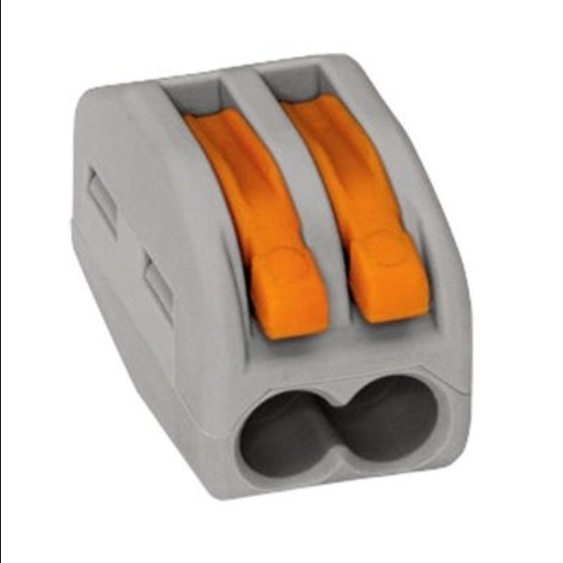
If these bad bois would still heat up, something allready is wrong outside the suspected connector problem.
Thank yall. Electrical is not my specialty. I will replace the connectors with something beefier and monitor.
Me tells me…that if the connector can see that kind of draw then the meter can too! Of course, I could be wrong and quite often am…just ask my wife!
I found this quick video that shows the ‘pulse train’ that @Jens is talking about.

Thx…I was not doubting Jen at all…my thought process kinda was if the connector can feel that kinda current draw surely a good DC clamp on meter can see it too. I still think it’s the connector. I dont know…I just drink beer and practice at being retired…thx for the video!
I hear ya. Electrical is not my specialty by a long shot. The last time I tried to measure something electronics related my shaky hands touched 2 pins with one probe and the pins disappeared before my very eyes. That ‘fixed’ that problem!
EDIT: I’ve noticed on those connectors that sometimes one of the pins can be pushed back in the connector instead of going inside the other half. The pins on mine have some wiggle room and I have to take care that all four go in. I suspect that if something like that happened you could get a poor connection with more heat but like I said I’m no expert about these things.
lol…Just wait until you get to my age!
Thanks yall. I have some new connectors coming tomorrow
If only I had a dollar for every time I touched two conductors with a single probe … sigh …
Yes, it isn’t uncommon to have one of the contacts in a housing backing out - more so on crimps you have done yourself and not commercial connections. I try (but often forget) to have a quick look at the back end of the housings. A pushed out contact will be very obvious.