Last year I had an issue with my Auto-Touch plate not functioning after I upgraded from a router to the 1.5KW Spindle. I was informed by Sienci that I had the Auto-Touch plates wires reversed in the connector to the SLB. They said that this issue cropped up because the Spindle is grounded to the SLB whereas the router wasn’t.
That being said…
One day I attached the touch-plate’s magnet to the Spindle’s body instead of it’s collet and it got me thinking… If the Spindle is grounded to the SLB and I’m attaching the magnet to the body of the spindle, Couldn’t I simply take the black touch-plate’s wire and attach it directly to ground via one of the connectors on the SLB. Then that would leave just one wire at the Touch-plate end connected to the touch-plate itself. This would mean that whenever I go to initiate a Probe, all I would need to do is place the touch-plate where I wanted and then start the probing.
Can anyone confirm that this would actually work? It would make the Touch probe pretty slick if this would work.
Or maybe extend the wire and go through the drag chains and leave it permanently attached to the spindle for a reliable connection that you don’t have to fuss with every time.
Just a bit of further explanation - the probe system works by looking for a closed circuit between the touch plate and ground. This connection can be reliably made with the ground wire attached to the collet. What you are proposing would insert the spindle bearings in the equation. Conductivity is not a thing with steel bearings and would be an absolute no go if the spindle had ceramic bearings. In other words, you might get lucky and have a conductive path thru the bearings one second and next second you don’t … in which case your endmill would be driven into the touch plate until the system realizes that there is an obstruction and error out.
The portion of the spindle that turns, call it the rotating shaft, has no direct connection to the stationary outside portion of the spindle (with ‘spindle’ being the entire assembly). Assuming you have steel bearings, the connection between the inside rotating bit and the outside stationary bit is only through those bearings. It is not an ‘intentional’ connection but rather a coincidental connection. I would imagine that the vast majority of time this connection is there but it is not guaranteed.
To answer your question: No, the connection might be there or might not be there depending on your luck. There is no ‘wire’ connecting the rotating shaft to the spindle’s stationary outside.
Higher end spindles have ceramic bearings so there would never be a connection between shaft and housing.
My auto-touch plate does appear to work through the grounding of the spindle, but per the above notes of caution/coincidence, I always magnet/clip the ground wire to the cutter when probing… just in case.
I have a full aluminium bed on my CNC which is also grounded, so ironically I have to ensure the auto-touch is insulated otherwise it always make a connection between plate and ground!
Jens is correct though a new spindle will conduct the probe ground sufficiantly at first. Due to the nature of digital signals, a ground does not need to be a perfect ground to flip a signal. One can flip a digital one into a zero using a ground connection through a resistor up to a few kilo ohms (pull down). The bearings not being a perfect conductor isn’t a problem when a spindle hasn’t been used a lot.
When a bearing is starting to wear down and maybe accumulates dust particles, the ground signal might become a maybe and no longer always trigger the flip to zero.
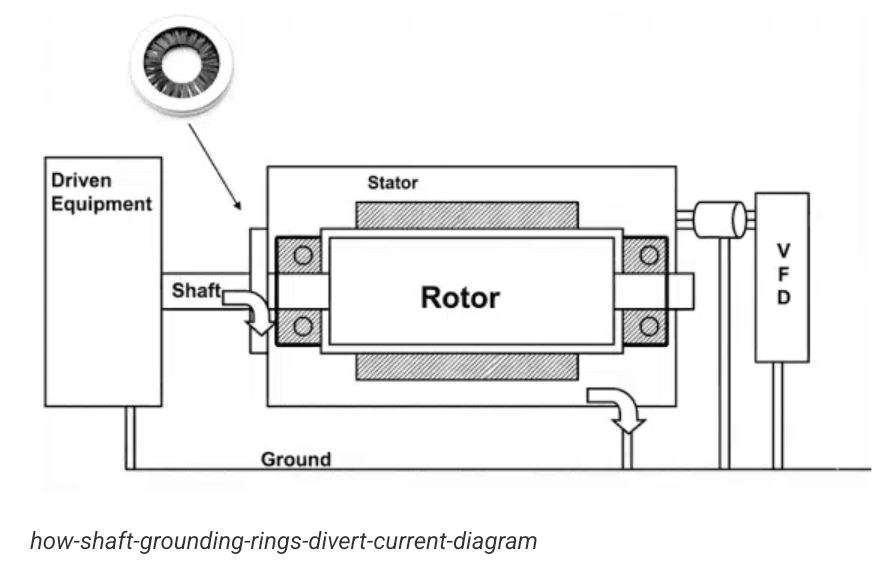
A spindle with a shaft grounding ring mitigates this problem by diverting the ground signal via a direct route from the shaft to the body instead of using the bearings. But even then it will eventually become a game of chance, because shaft grounding is not imume to wear either,
So yeah, it will work, and if you stay vigilant (keep track of the shaft to body resistance), you can get away with it for quite some time before the inevitable ohnoooo. Me using mostly cheap ass bits, would prolly take the risk, because.. meh.
Mute point though, because I have a router and it’s easy to play the tough guy when you can’t put the money where the mouth is,
@rblondeau My spindle is 1.5KW but not the Sienci model, however they are all very likely similar. My auto-touch is the Carbide3D/ShapeOKO model which uses a crocodile-clip not a magnetic ground wire.
You are quite correct, but it doesn’t apply in my case - I attach to the cutter itself for ground
I use exactly this for tool height setting using a spring-loaded button to which the probe wire connects. Probably been using these for 10 years and never had an issue. Bear in mind that the bearings are certainly rolling types, will be under some preload, and in my case at least the coupling from motor to spindle is by a belt which also pulls the spindle slightly. When the spindle is stationary there will be a metal contact between the outer and inner races and the balls/rollers. If one is worried you could also use a higher pullup resistor on the probe input to make the system less sensitive to the spindle to ground resistance. Of course with ceramic bearings this doesn’t apply and when the spindle is rotating there will (or should) be an oil film. So don’t probe with the spindle running! (Though I’m impressed that Renishaw wireless probes can operate with the spindle running at 1000 rpm!)